





Table of Contents
- Introduction to National Highway 19
- Route
- A Historical Perspective: The Grand Trunk Road Connection
- Toll plazas
- Driving Conditions on NH19: What to Expect
- Conclusion
- Faq's
Introduction to National Highway 19
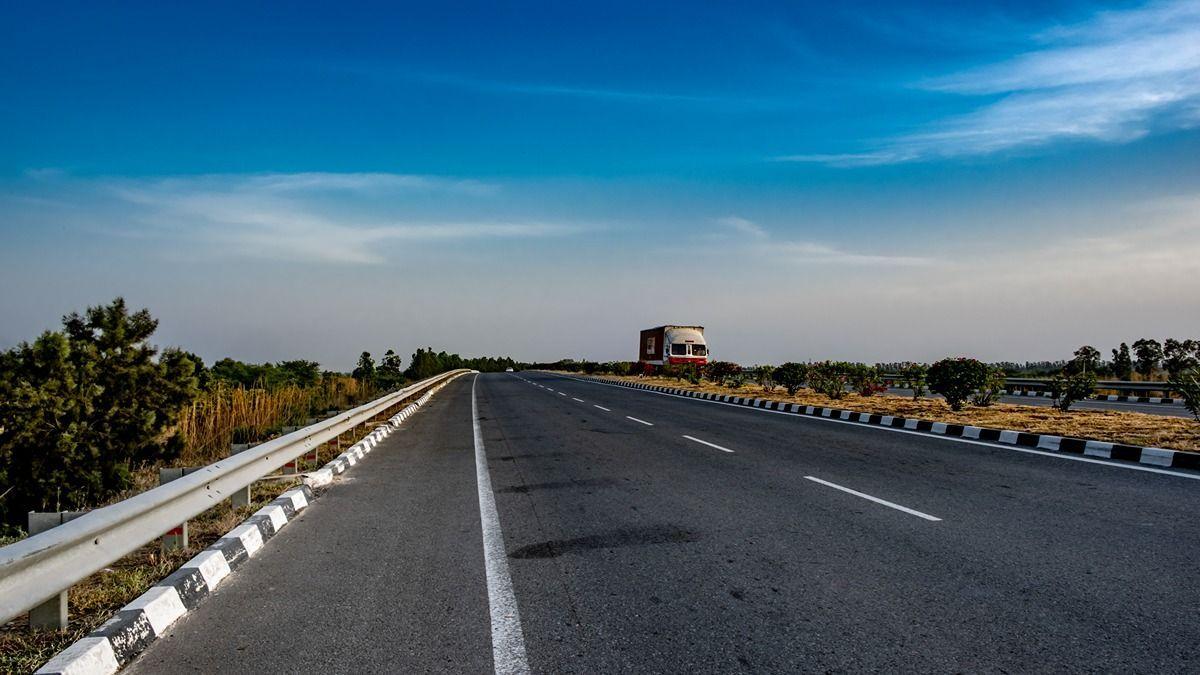
National Highway 19 (NH 19) holds significant importance as one of India's primary national highways, previously known as the Delhi-Kolkata Road. Renowned for its pivotal role in connecting major cities, NH 19 is recognized as one of the busiest highways in the country, facilitating extensive vehicular traffic and commercial activities. Following the renumbering of national highways in India by the Ministry of Road Transport and Highways in 2010, the highway was reclassified, with its Delhi to Agra segment now recognized as National Highway 44, while the stretch from Agra to Kolkata remains under NH 19.
This highway is integral to the historical Grand Trunk Road, a vital trade route that has historically linked various regions of India, and it continues to play a critical role in the socio-economic landscape of the country. Serving as a crucial artery for transportation, NH 19 connects important urban centers, including Delhi, Agra, Kanpur, and Kolkata, thus supporting both passenger and freight movement.
 NH 19
NH 19
Route
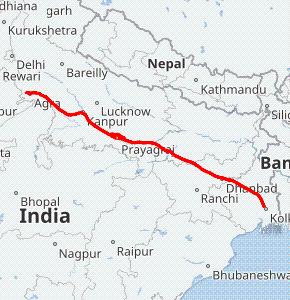
National Highway 19 (NH 19) is a major roadway in India that facilitates significant connectivity between Agra and Kolkata, spanning across four states: Uttar Pradesh, Bihar, Jharkhand, and West Bengal. Starting at Agra, NH 19 merges with NH-44, which further connects crucial cities like Kanpur, Allahabad, and Varanasi in Uttar Pradesh. As travelers journey along NH 19, they enter Bihar where key towns such as Mohania, Sasaram, Dehri On Sone, Aurangabad, and Dobhi (Gaya) are located, enhancing the highway's importance in regional accessibility. Continuing into Jharkhand, the highway serves areas including Barhi (Hazaribagh), Bagodar (Giridih), and Gobindpur (Dhanbad), each contributing to the economic and social landscape of the state. Finally, NH 19 progresses into West Bengal, intersecting with notable cities like Asansol and Durgapur, before concluding at its junction with NH-16 near Kolkata, one of India's major metropolitan hubs.
Given its extensive reach and the variety of urban and rural landscapes it connects, NH 19 stands as a crucial artery in India's infrastructure, reflecting the country's commitment to enhancing transportation networks for economic development and improved access to essential services.
 Route NH 19
A Historical Perspective: The Grand Trunk Road Connection
NH19 roots can be traced back to the legendary Grand Trunk Road (G.T. Road), one of the oldest and longest major roads in South Asia. Historically, the G.T. Road was a vital trade route, connecting regions from Bengal to Central Asia. Emperors and rulers throughout history recognized its strategic importance, investing in its maintenance and expansion. The Mauryan Empire, the Mughal Empire, and later the British Raj, all played a role in shaping the G.T. Road into the artery it became. Sher Shah Suri, a 16th-century ruler, is particularly credited with significantly improving and standardizing the road. He constructed rest stops, wells, and other amenities along the route, facilitating travel and trade.
The British further developed the road, recognizing its military and commercial value. They used it to transport troops and resources, consolidating their control over the Indian subcontinent. The modern-day NH19 largely follows the alignment of the historical G.T. Road, bearing witness to the passage of time and the constant flow of people and goods. Traveling along NH19 is, in a sense, a journey through history, offering glimpses into India's rich past.
Toll plazas
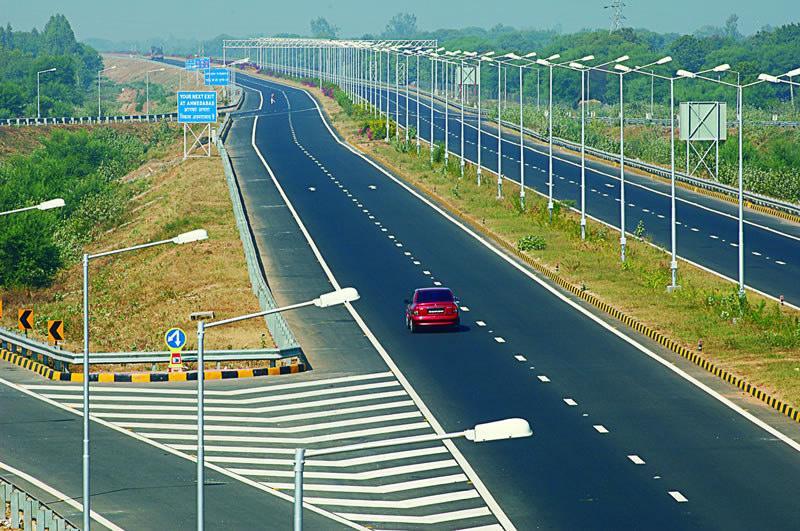
The journey from Agra to Kolkata spans several states in India, each characterized by its toll plazas along the route. Starting in Uttar Pradesh, travelers encounter a series of toll booths that facilitate smooth transit. Key toll plazas include Tundla, which serves as an important point close to Agra, followed by Gurau Semra Atikabad, Anantram, and Barajod. As one progresses further, the toll plazas of Badauri, Katoghan, and Prayagraj Bypass (Khokhraj) are encountered. Lalanagar and Daffi are the next stops before reaching Varanasi, a major city renowned for its cultural and historical significance. Crossing into Bihar, drivers will find three key toll plazas: Mohania, Sasaram, and Saukala. Each of these strategic locations helps manage the flow of traffic and ensure the upkeep of the roads, facilitating commerce and travel.
Once in Jharkhand, the route includes toll collection points at Rasoiya Dhamna, Ghangri, and Beliyad. These plazas represent the state's contribution to the connectivity between northern and eastern India, allowing efficient passage for both personal and commercial vehicles. As the journey progresses into West Bengal, motorists will encounter the final toll plazas before reaching Kolkata. Notable among these are Durgapur, Palsit, and Dankuni. These plazas play a crucial role in managing traffic flow into one of India's largest metropolitan areas. Overall, the road from Agra to Kolkata highlights the importance of a well-maintained toll system that not only supports economic activities but also enhances the travel experience for countless passengers moving between these vibrant cultural centers. Each toll plaza serves as a testament to the connectivity and infrastructural development across states in India.
Driving Conditions on NH19: What to Expect
Driving conditions on NH19 can vary depending on the section of the highway, the time of year, and other factors. Here's what you should generally expect:
- Road Quality: The overall road quality on NH19 is generally good, especially on the sections that are part of the Golden Quadrilateral project. However, some stretches may have occasional potholes or uneven surfaces, particularly during or after the monsoon season. Be prepared to adjust your speed accordingly.
- Traffic Density: NH19 is one of the busiest national highways in India, so expect heavy traffic, especially near major cities and industrial areas. Traffic congestion can be particularly severe during peak hours and holidays. Plan your journey accordingly, and consider traveling during off-peak hours to avoid delays.
- Lane Discipline: Lane discipline can be a challenge on Indian highways, including NH19. Be prepared for vehicles changing lanes without signaling and a general lack of adherence to traffic rules. Maintain a safe following distance and be extra cautious when overtaking.
- Speed Limits: Speed limits on NH19 vary depending on the type of vehicle and the section of the highway. Typically, the speed limit for cars is around 80-100 kmph on open stretches. Pay attention to posted speed limit signs and adhere to them for your safety.
- Weather Conditions: Weather conditions can significantly impact driving conditions on NH19. During the summer months (April-June), temperatures can soar, making driving uncomfortable and potentially hazardous. The monsoon season (July-September) can bring heavy rainfall, leading to waterlogging and reduced visibility. Winter months (November-February) can be pleasant, but fog can be a factor, especially in the northern regions. Check the weather forecast before your journey and be prepared for changing conditions.
Conclusion
National Highway 19 (NH 19) is a crucial roadway in India, connecting the northern and eastern regions from Delhi to Kolkata. Spanning approximately 1,450 kilometers, it facilitates vital trade, tourism, and cultural exchange. NH 19 serves as a lifeline for millions, linking major cities and towns, enhancing economic activities, and supporting local communities. Its infrastructure includes well-maintained stretches, roadside amenities, and access points, which are integral to India's transportation network. By improving inter-regional connectivity, NH 19 contributes significantly to national development, making it an essential artery for commerce and a key facilitator of socioeconomic growth.

explore further
Latest from Editorials
More from Publications
Resources


