





Table of Contents
- Introduction
- What are Flaring Tools
- Types of Flaring Tools
- Applications of Flaring Tools
- Step-by-Step Guide to Using a Flaring Tool
- Choosing the Right Flaring Tool
- Maintenance and Safety Tips
- Conclusion
- Faq's
Introduction
Flaring tools are indispensable in various industries, enabling the creation of secure, leak-proof connections in tubing and piping systems. In India, their applications span across plumbing, automotive, HVAC, and more. This comprehensive guide delves into the types, uses, and techniques associated with flaring tools.
What are Flaring Tools
Flaring tools are specialized instruments used to create a flared or conical end on tubing or piping. This flared end allows for a tight and secure connection between pipes or between a pipe and a fitting, ensuring a leak-proof seal. By expanding the tube's end in a controlled manner, flaring tools help create a durable joint that can withstand high pressure, making them essential in various applications.
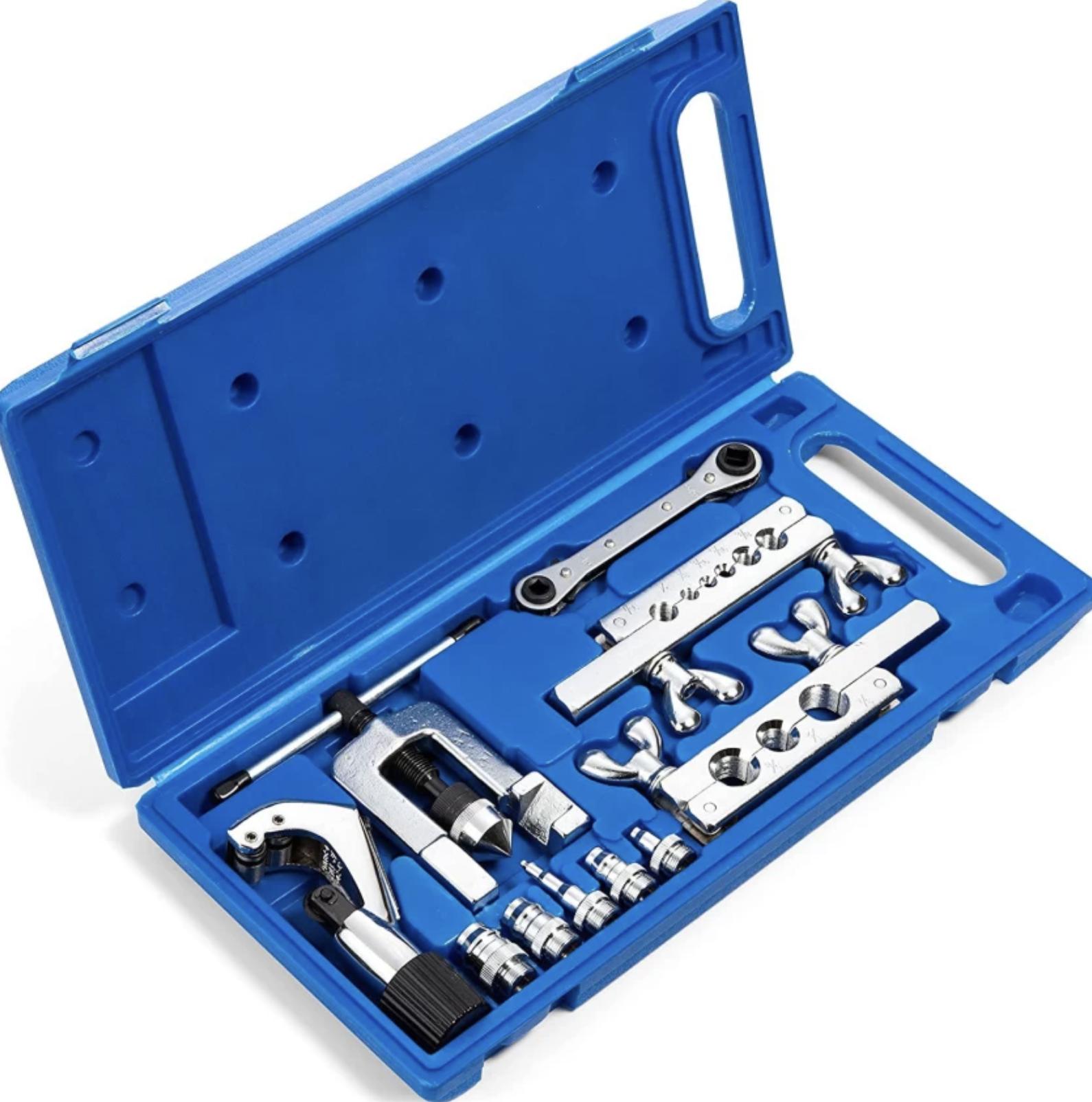 Flaring tool kit, Flipkart
In India, where industries like plumbing, automotive, HVAC, and refrigeration are rapidly expanding, the demand for high-quality flaring tools has significantly increased. These tools are widely used in gas pipelines, brake lines, refrigeration units, and air conditioning systems, where strong, leak-proof connections are crucial. With the rising infrastructure and industrial developments, professionals and technicians are increasingly relying on flaring tools for efficient and reliable tubing installations.
Types of Flaring Tools
Understanding the different types of flaring tools is crucial for selecting the right tool for a specific application.
Manual Flaring Tools
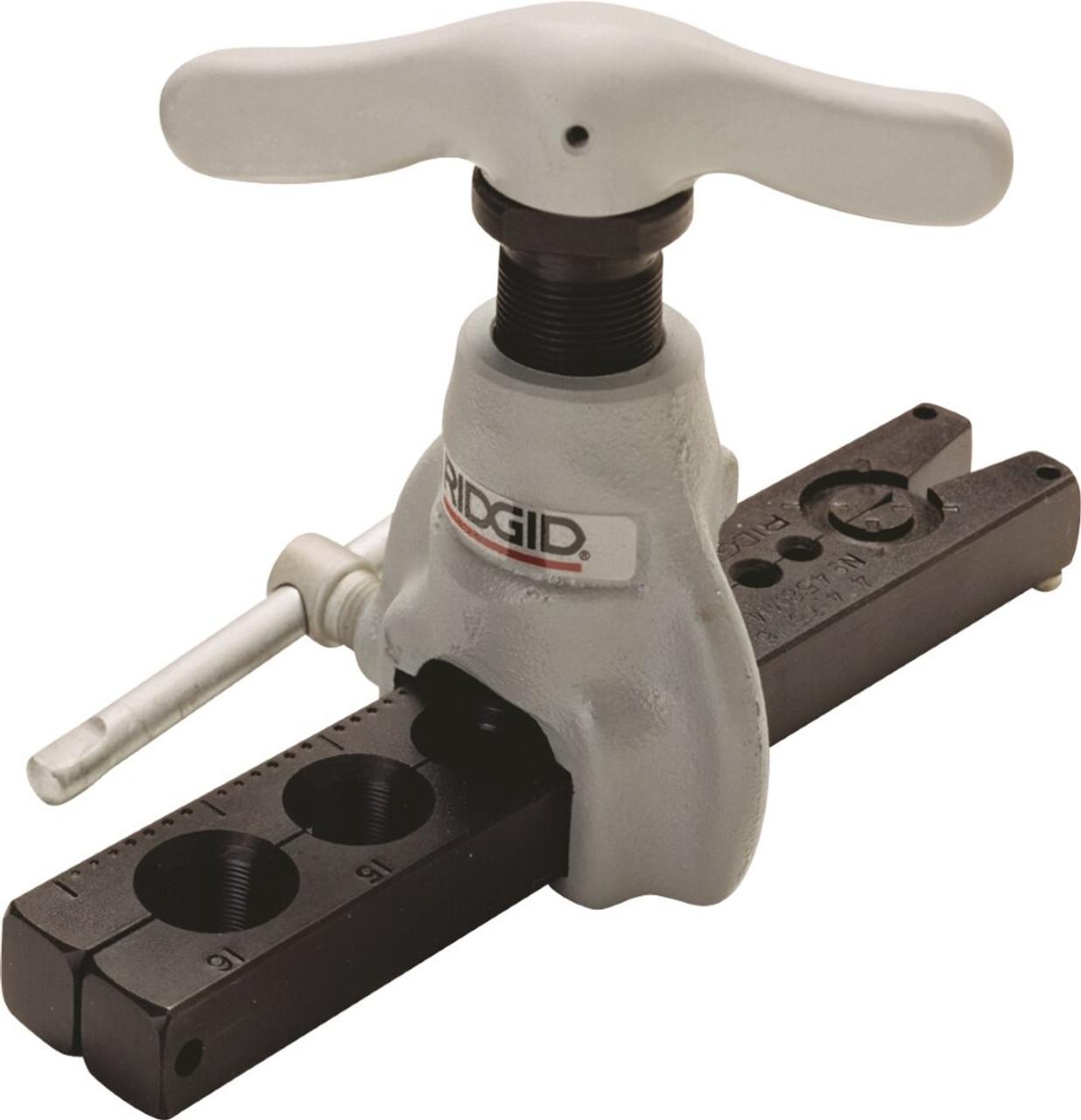 Manual Flaring Tools, Nubco
Manual flaring tools are the most widely used and are ideal for soft materials like copper and aluminum. They typically consist of a flaring bar with multiple holes to accommodate different tubing sizes and a yoke with a flaring cone that is manually tightened to form the flare. These tools are popular because of their affordability, making them a preferred choice for plumbers, HVAC technicians, and automotive mechanics who frequently work with softer tubing materials. Since they rely on manual effort, they are best suited for small-scale applications or projects that do not require frequent flaring.
Despite their simplicity, manual flaring tools require careful handling to achieve precise flares. Inconsistent pressure or misalignment can lead to imperfect flares, causing leaks in the system. Proper preparation, such as cutting the tube cleanly and deburring its edges, is essential to ensure a secure connection. While these tools may not be as fast or precise as hydraulic flaring tools, their cost-effectiveness and ease of use make them a staple in many industries.
Hydraulic Flaring Tools
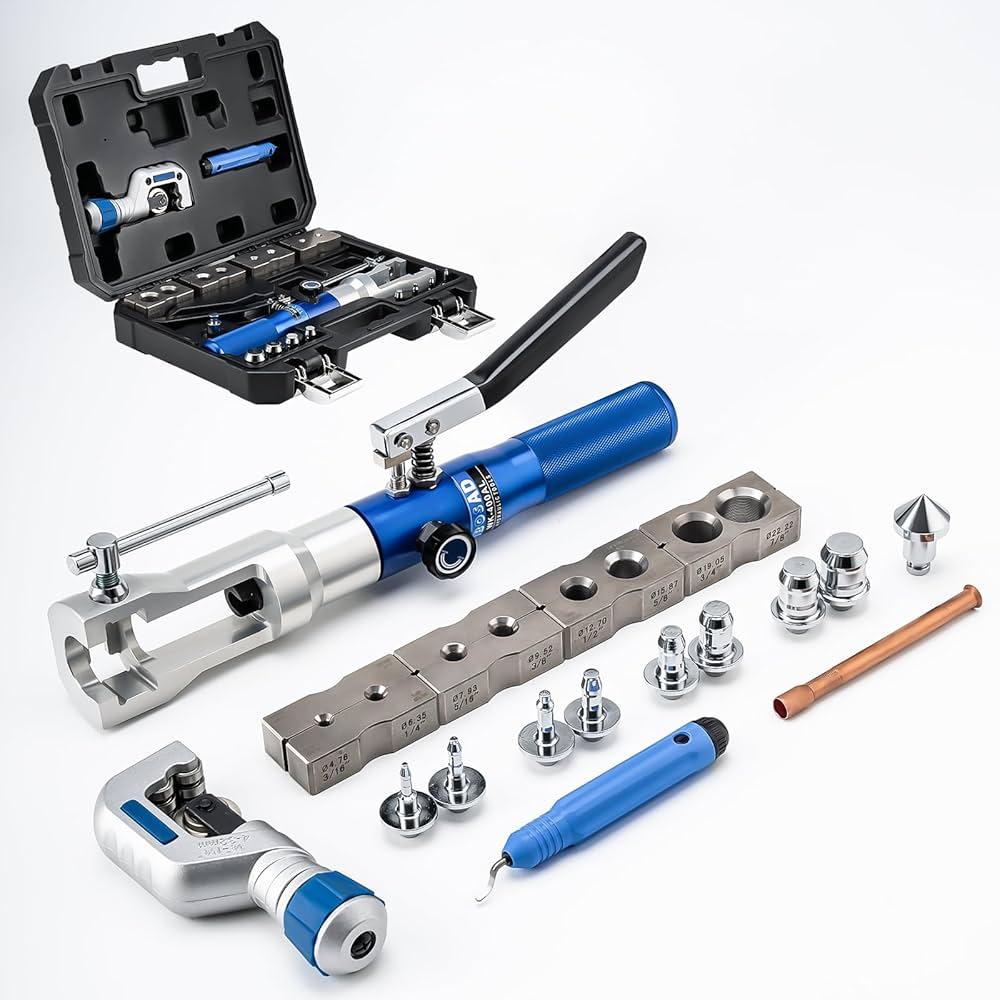 Hydraulic Flaring Tools, Amazon.in
Hydraulic flaring tools use hydraulic pressure to create flares, making them highly efficient for harder materials like stainless steel or for large-diameter tubing. These tools offer enhanced precision and require significantly less manual effort compared to their manual counterparts. The use of hydraulics ensures that the force applied during the flaring process is consistent, reducing the chances of tube deformation and ensuring a high-quality, uniform flare. Due to their ability to handle tougher materials, they are commonly used in industrial applications, including high-pressure gas and hydraulic systems.
However, the advanced functionality of hydraulic flaring tools comes at a higher cost. They are more expensive than manual tools and are typically used by professionals who require high accuracy and efficiency in their work. While they offer superior performance, their bulkier design makes them less portable compared to manual flaring tools. Despite this, for applications that demand reliability and precision, such as automotive manufacturing and industrial piping, hydraulic flaring tools are often the best choice.
Eccentric Cone Flaring Tools
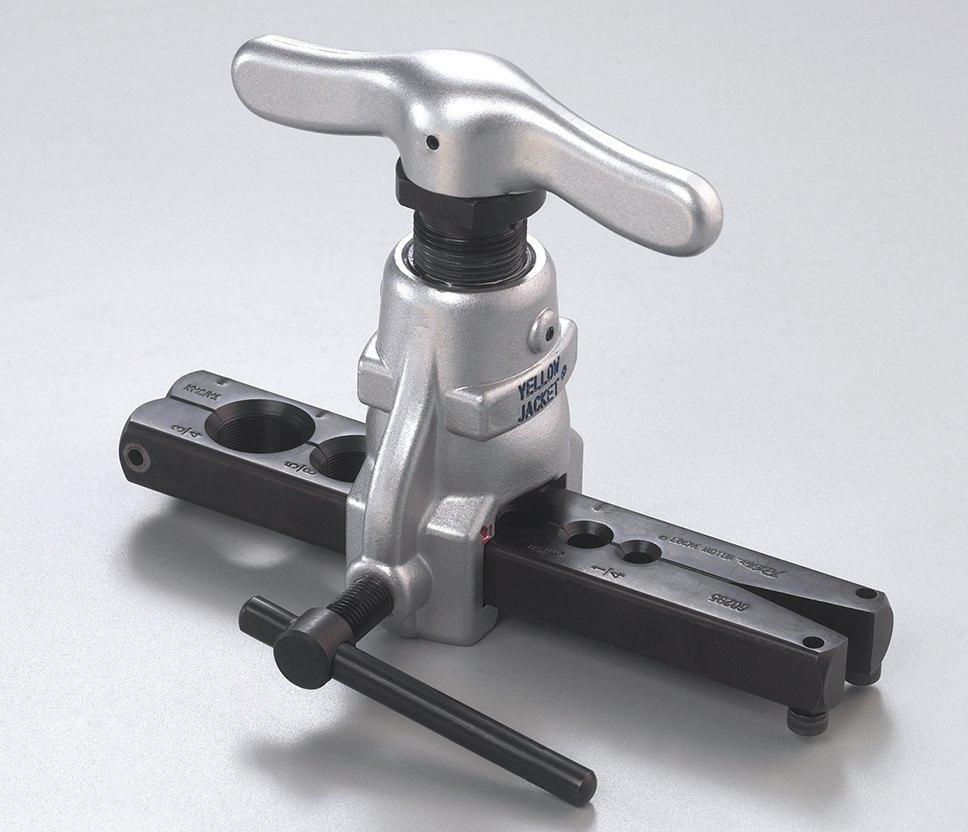 Eccentric Cone and Flaring Tools, IndiaMart
Eccentric cone flaring tools are designed with an off-center cone that rotates as it forms the flare, resulting in a more uniform and smoother flare compared to traditional manual flaring tools. The eccentric motion reduces friction during the flaring process, which minimizes the risk of material thinning or cracking. This makes them particularly useful in refrigeration and HVAC systems, where the quality of the flare directly affects the system's efficiency and overall performance. The precision of these tools ensures that the tubing maintains its strength, preventing leaks that could lead to inefficiencies or costly repairs.
One of the main advantages of eccentric cone flaring tools is their ability to create high-quality flares with minimal effort. The rotating motion of the cone evenly expands the tube, producing a flare that is more symmetrical and has fewer imperfections. This makes them a preferred choice in applications that demand airtight connections, such as air conditioning and cooling systems. While they are more expensive than standard manual tools, their improved accuracy and ease of use make them a worthwhile investment for professionals in the HVAC and refrigeration industries.
Also Read: Electrical Safety in Societies: Key Aspects, Hazards & Essential Tips
Applications of Flaring Tools
Plumbing and HVAC Systems
In plumbing and HVAC systems, flaring tools play a crucial role in connecting copper or aluminum tubing, ensuring a leak-proof and long-lasting joint. Properly flared tubing is essential for transporting water, gas, and refrigerants without leaks, as any breach in the connection can lead to inefficiencies, increased costs, and potential safety hazards. Flared connections are especially useful in high-pressure systems where threaded or compression fittings might not be as reliable. In India, where HVAC systems are extensively used in residential, commercial, and industrial buildings, flaring tools are a necessity for ensuring optimal system performance.
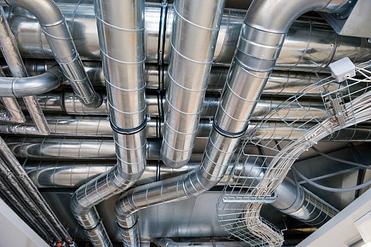 HVAC Piping, piping
The reliability of flaring tools in HVAC systems makes them the preferred choice for professionals working with air conditioning and heating units. Unlike soldered connections, flared joints offer a strong yet flexible seal that can be easily maintained or replaced when necessary. This is particularly beneficial in India's extreme climate conditions, where HVAC efficiency directly impacts indoor comfort. Whether it's for installing new pipes or repairing existing ones, flaring tools help technicians create secure and long-lasting connections, reducing maintenance needs and improving system efficiency.
Automotive Industry
The automotive industry relies heavily on flaring tools to create secure and durable connections in various fluid-carrying lines, such as brake lines, fuel lines, and transmission lines. Brake lines, in particular, require highly precise flaring to ensure that the hydraulic pressure in the braking system remains stable and does not leak. A poor-quality flare can lead to brake fluid leakage, resulting in reduced braking efficiency and severe safety risks. Given the rising number of vehicles on Indian roads, proper maintenance and repair of these critical systems are paramount for road safety.
 Automotive Industry, Wiki
Beyond brake lines, fuel and transmission lines also benefit from flared connections, as these systems operate under high pressure and require leak-proof seals. Mechanics and automotive technicians frequently use flaring tools to maintain and repair these lines, ensuring vehicle efficiency and longevity. Since India has a large automotive service industry with growing demands for high-performance and fuel-efficient vehicles, the use of reliable flaring tools in automotive repair and maintenance is indispensable. The precision and durability of flared connections help enhance vehicle performance while minimizing the risks associated with fluid leaks.
Refrigeration Systems
Flaring tools are indispensable in refrigeration systems, where they are used to securely connect tubing that carries refrigerants. A well-executed flare prevents refrigerant leaks, which is crucial for maintaining system efficiency, ensuring proper cooling, and extending the lifespan of the unit. Given India's climate, where high temperatures drive the demand for air conditioning and refrigeration, the reliability of these systems is critical for residential, commercial, and industrial applications. Improper flaring can lead to refrigerant loss, reduced cooling efficiency, and higher energy consumption, making high-quality flaring tools essential in this field.
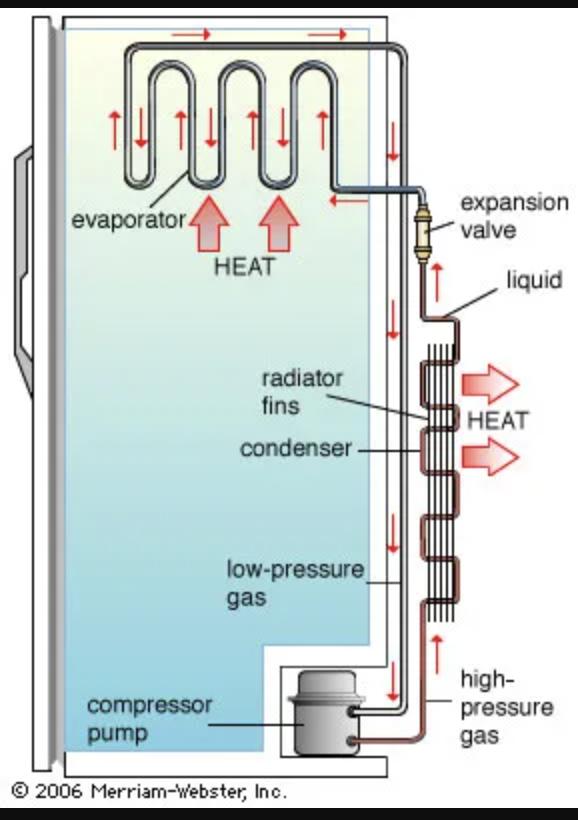 Refrigeration System, Britannica
In commercial refrigeration, such as in cold storage units, supermarkets, and food processing industries, secure flaring connections help maintain consistent cooling temperatures, preventing food spoilage and ensuring compliance with health and safety standards. HVAC and refrigeration professionals rely on flaring tools to create precise and durable connections, reducing the risk of system failures. As India's demand for refrigeration grows, particularly in logistics and food preservation industries, the role of flaring tools in ensuring energy-efficient and environmentally friendly refrigeration systems becomes even more significant.
Gas and Hydraulic Lines
Gas distribution and hydraulic systems depend on flaring tools to create tight, secure connections that prevent leaks and system failures. Gas pipelines, whether used in residential kitchens or industrial facilities, require leak-proof fittings to ensure safety and prevent hazardous gas leaks. A properly flared connection is far more reliable than standard threaded or compression fittings, as it can withstand higher pressures and temperature fluctuations without loosening over time. In India, where gas pipelines are increasingly replacing traditional LPG cylinders, the demand for high-quality flaring tools has grown substantially.
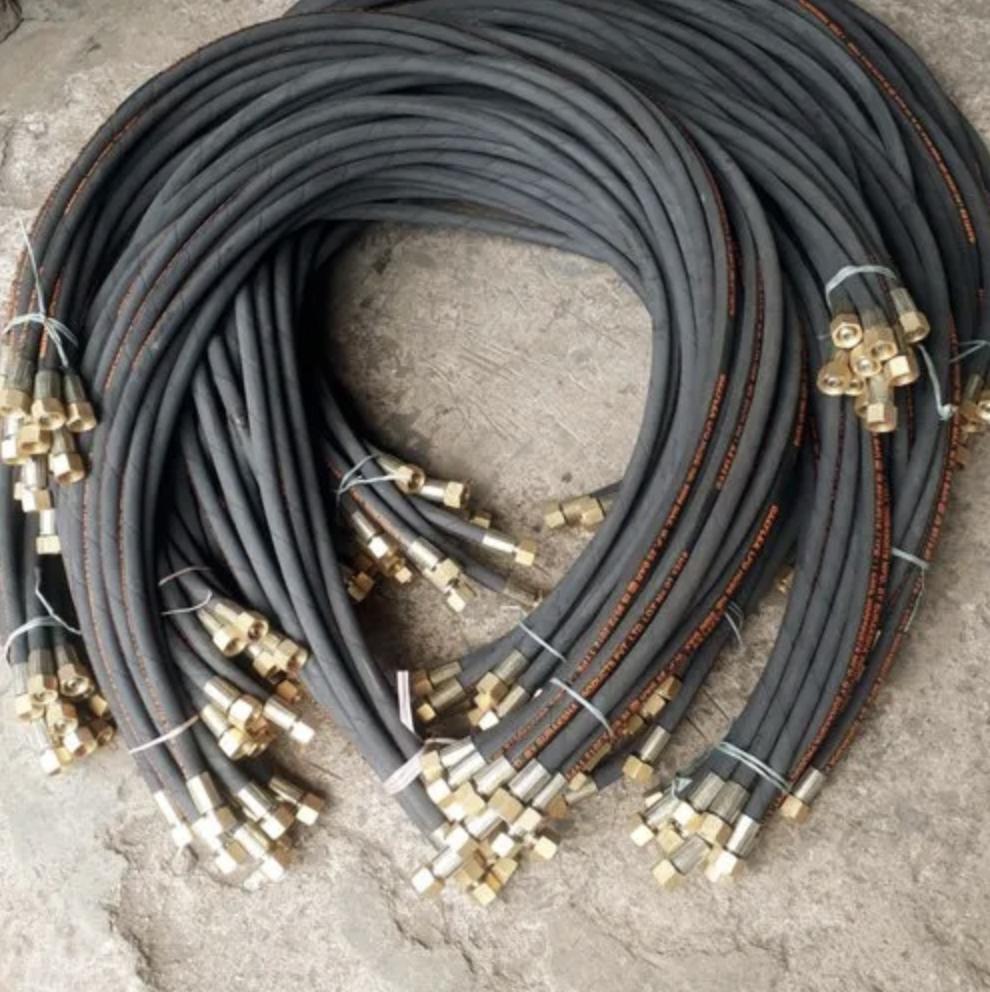 Hydraulic Pipes, IndiaMart
Hydraulic systems, used in heavy machinery, construction equipment, and industrial automation, also require robust flared connections to handle the extreme pressure of hydraulic fluids. A compromised hydraulic line can lead to equipment failure, costly repairs, and potential safety hazards for workers. By using precision flaring tools, professionals can ensure that hydraulic lines remain secure, enhancing the efficiency and reliability of hydraulic-powered machinery. As India continues to expand its infrastructure and industrial capabilities, flaring tools will remain a crucial component in ensuring safe and efficient gas and hydraulic operations.
Step-by-Step Guide to Using a Flaring Tool
Proper use of a flaring tool is essential to achieve a secure and leak-proof connection.
Preparation
- Cut the Tubing: Measure and cut the tubing to the desired length using a tubing cutter. Ensure the cut is straight and clean.
- Deburr the Edges: Use a deburring tool to remove any sharp edges or burrs from the cut end, as these can affect the quality of the flare.
- Select the Appropriate Tool: Choose a flaring tool compatible with the tubing material and size.
Flaring Process
- Insert the Tubing: Place the tubing into the appropriate hole in the flaring bar, allowing a small portion to protrude (typically equal to the tubing diameter).
- Clamp the Tubing: Tighten the flaring bar to securely hold the tubing in place.
- Position the Flaring Cone: Align the flaring cone with the tubing end.
- Form the Flare: Turn the yoke handle to press the cone into the tubing, forming the flare. Apply steady pressure to ensure an even flare.
- Inspect the Flare: Once formed, release the cone and inspect the flare for uniformity and smoothness.
Post-Flaring Inspection
After completing the flare, follow these steps to ensure it meets quality standards:
- Check for Uniformity- The flare should be symmetrical and evenly shaped.
- Look for Cracks- Inspect the flare closely for any cracks, as these can cause leaks.
- Verify the Fit- Insert the flared tubing into the fitting to ensure it fits snugly and forms a tight seal.
If any defects are found, the tubing should be re-flared or replaced to prevent potential leaks.
Also Read: Pipe Joints: Understanding Types, Strengths, and Applications
Choosing the Right Flaring Tool
Selecting the correct flaring tool is crucial for ensuring efficiency, precision, and safety in various applications. The right tool depends on factors such as material compatibility, tubing size, flare angle, and ease of use. Understanding these aspects will help professionals and DIY enthusiasts choose the most suitable flaring tool for their specific needs.
Material Compatibility: The type of material being flared plays a vital role in selecting the appropriate tool. For softer metals like copper and aluminum, manual flaring tools are generally sufficient, providing ease of use and affordability. However, when working with harder materials such as stainless steel or other tough metals, hydraulic flaring tools are recommended. They apply greater force with minimal effort, ensuring clean and precise flares without deforming the tubing.
Size Specifications: Flaring tools come in different sizes to accommodate various tubing diameters. It's important to ensure that the tool you choose supports the specific sizes you work with, as using an incompatible tool can result in improper flares. Additionally, different applications require different flare angles. A 45° flare is commonly used in plumbing, HVAC, and refrigeration systems, whereas a 37° flare is standard for automotive brake lines and hydraulic applications. Selecting a tool with the correct angle is essential for achieving a secure, leak-proof connection.
Ease of Use: The choice between manual and hydraulic flaring tools depends on the user's requirements. Manual tools are more affordable and suitable for small-scale or occasional use, but they require more physical effort. On the other hand, hydraulic tools offer greater precision and require significantly less manual force, making them ideal for professionals working with multiple or larger flares daily.
Portability: If you frequently work on-site, portability becomes an important factor. A lightweight, compact manual flaring tool is easy to carry and convenient for quick jobs. However, if you require high efficiency and precision in industrial settings, a hydraulic flaring tool, despite being bulkier, may be the better investment. Choosing the right balance between portability and performance ensures that you can complete tasks efficiently without compromising on quality.
Maintenance and Safety Tips
Regular Cleaning
- Wipe down the flaring tool after each use to remove debris.
- Lubricate moving parts to ensure smooth operation.
Proper Storage
- Store in a dry place to prevent rust and corrosion.
- Keep the tool in its protective case to avoid damage.
Safety Precautions
- Always wear safety goggles to protect your eyes from metal shavings.
- Ensure the tubing is securely clamped before flaring to prevent movement.
- Avoid excessive force to prevent tube damage.
Also Read: Preventing Household Leaks: Common Causes and Solutions
Conclusion
Flaring tools play a crucial role in various industries, ensuring strong, leak-proof connections in piping systems. From HVAC and plumbing to automotive and refrigeration, these tools enhance efficiency and reliability. Choosing the right flaring tool, following proper flaring techniques, and maintaining safety standards are essential for achieving high-quality results. As India's industrial and construction sectors continue to expand, the demand for flaring tools remains strong, making them a valuable asset for professionals and DIY enthusiasts alike.

explore further
Latest from Editorials
More from Publications
Resources


