




Table of Contents
- Introduction
- What are Cable-Stayed Bridges?
- Key Characteristics
- Major Components of Cable-Stayed Bridges
- Advantages of Cable-Stayed Bridges
- Disadvantages of Cable-Stayed Bridges
- Conclusion
- Faq's
Introduction
Cable-stayed bridges stand as impressive feats of engineering, gracing skylines with their elegant geometry and structural efficiency. These modern marvels have become increasingly popular for spanning long distances, offering a compelling alternative to suspension bridges in many situations. This article delves into the key components, working principles, advantages, and disadvantages of cable-stayed bridges, providing a comprehensive understanding of these iconic structures.
What are Cable-Stayed Bridges?
A cable-stayed bridge is a type of bridge in which the deck (the horizontal surface carrying traffic) is supported by cables (stays) directly connected to one or more towers (pylons). Unlike suspension bridges, where cables are suspended between two main cables that run between anchorages, cable-stayed bridges have cables that run directly from the deck to the towers in a more direct manner.
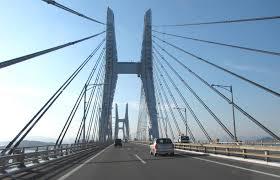 Cable-Stayed,Constrofacilitator
Key Characteristics
- Pylons (Towers): One or more tall structures, typically made of concrete or steel, that act as the primary vertical support for the bridge. Pylons transfer the load from the deck to the foundations.
- Deck: The horizontal roadway or pathway that carries traffic across the span. The deck is usually made of steel, concrete, or a composite of both.
- Stays (Cables): High-strength steel cables that connect the deck to the pylons. These cables are the defining feature of cable-stayed bridges, transferring the load from the deck to the pylons.
- Anchorages: Points on the deck and within the pylons where the stays are securely fastened.
- Foundations: The substructure that supports the pylons and transfers the load to the ground.
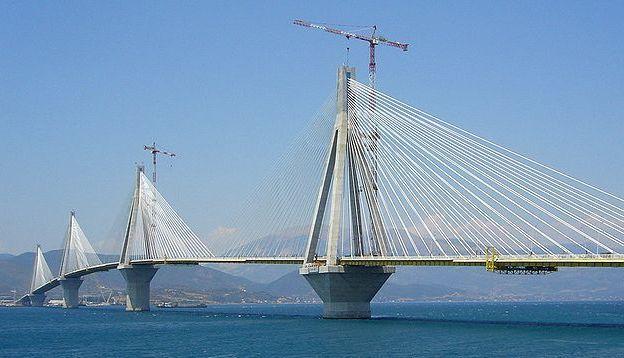 Stay cable bridge,Pinterest
Major Components of Cable-Stayed Bridges
Cable-stayed bridges are a type of bridge where the roadway is supported by cables that are anchored to towers. The major components include
- Towers (Pylons): Vertical structures that support the cables and carry the load to the foundation. They are typically made of reinforced concrete or steel.
- Cables: High-tensile strength cables that connect the towers to the bridge deck. They can be organized in various patterns, such as fan or harp configurations
- Bridge Deck: The surface on which vehicles and pedestrians travel. It is supported by the cables and may be constructed from various materials, including concrete or steel
- Foundations: The base structures that anchor the towers to the ground. They must be designed to handle the enormous loads transmitted from the towers.
- Anchorages: Structures that secure the ends of the cables to the bridge or the ground, ensuring stability and load distribution.
- Diaphragms: Components that help distribute loads across the bridge deck and maintain structural integrity, often located at the connections between the deck and pylons.
- Expansion Joints: Allow for thermal expansion and contraction of the bridge materials, helping to prevent damage over time.
- Bearing Systems: Devices that allow the deck to move slightly in response to loads and temperature changes while transferring forces to the supports.
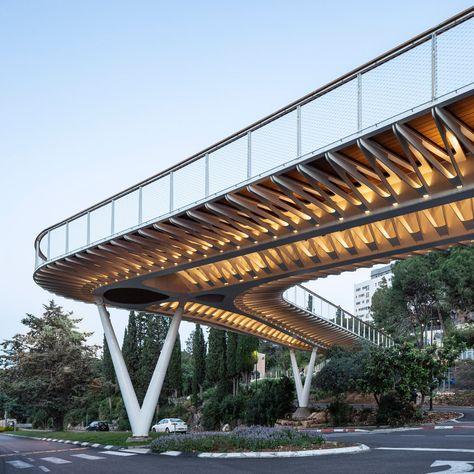 Components of Cable-Stayed Bridges,Pinterest
Advantages of Cable-Stayed Bridges
- Longer Spans: Can span longer distances than many other bridge types (except suspension bridges) making them suitable for wide rivers, straits, or valleys.
- Aesthetic Appeal: Often considered visually appealing due to their elegant design.
- Faster Construction: Can often be constructed more quickly than suspension bridges because they don't require large anchorages for the main cables.
- Less Material: Typically require less material (steel and concrete) than suspension bridges for comparable spans.
- High Stiffness: The direct connection between the deck and pylons provides greater stiffness, reducing deck deflections under load.
- Adaptable Design: Can be adapted to a variety of site conditions and aesthetic preferences.
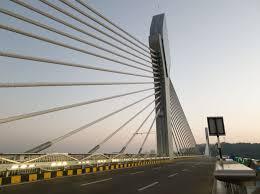 Advantages of Cable-Stayed Bridges, Pinterest
Disadvantages of Cable-Stayed Bridges
- Complex Design and Analysis: Require sophisticated engineering design and analysis due to the complex interaction of the cables, deck, and pylons.
- Sensitive to Cable Tension: Maintaining proper cable tension is crucial for the bridge's stability. Changes in cable tension due to corrosion, creep, or other factors can affect the bridge's performance.
- Construction Complexity: While potentially faster than suspension bridge construction, building these structures is still a complex engineering task.
- Cost: Can be expensive, especially for very long spans or complex designs.
- Vulnerability to Wind: Susceptible to wind-induced vibrations, requiring careful aerodynamic design and potentially the use of dampers.
- Maintenance: Requires regular inspection and maintenance of the cables and anchorages to ensure long-term durability.
Conclusion
Cable-stayed bridges are remarkable structures that combine engineering ingenuity with aesthetic appeal. Their ability to span long distances efficiently and gracefully makes them a valuable solution for modern infrastructure projects. While they present certain design and maintenance challenges, the advantages of cable-stayed bridges often outweigh the drawbacks, making them a popular choice for bridges around the world.

explore further
Latest from Contemporary ideas
More from Innovations
Resources


