





Table of Contents
- Introduction
- Project Overview
- Top Highlights of the Project
- Mumbai-Ahmedabad Bullet Train Project Timeline
- Why the Bullet Train Project Matters for India
- Latest Updates
- Conclusion
- Faq's
Introduction
India's ambitious leap into the era of high-speed rail is embodied in the Mumbai-Ahmedabad Bullet Train project, the country's first high-speed rail corridor. Developed with Japanese assistance, this transformative initiative aims to revolutionize rail travel across the western belt of India, significantly reducing travel time between Mumbai and Ahmedabad. By incorporating cutting-edge Shinkansen technology, the project promises a seamless, efficient, and modern transportation experience, setting a new benchmark for rail infrastructure in the country.
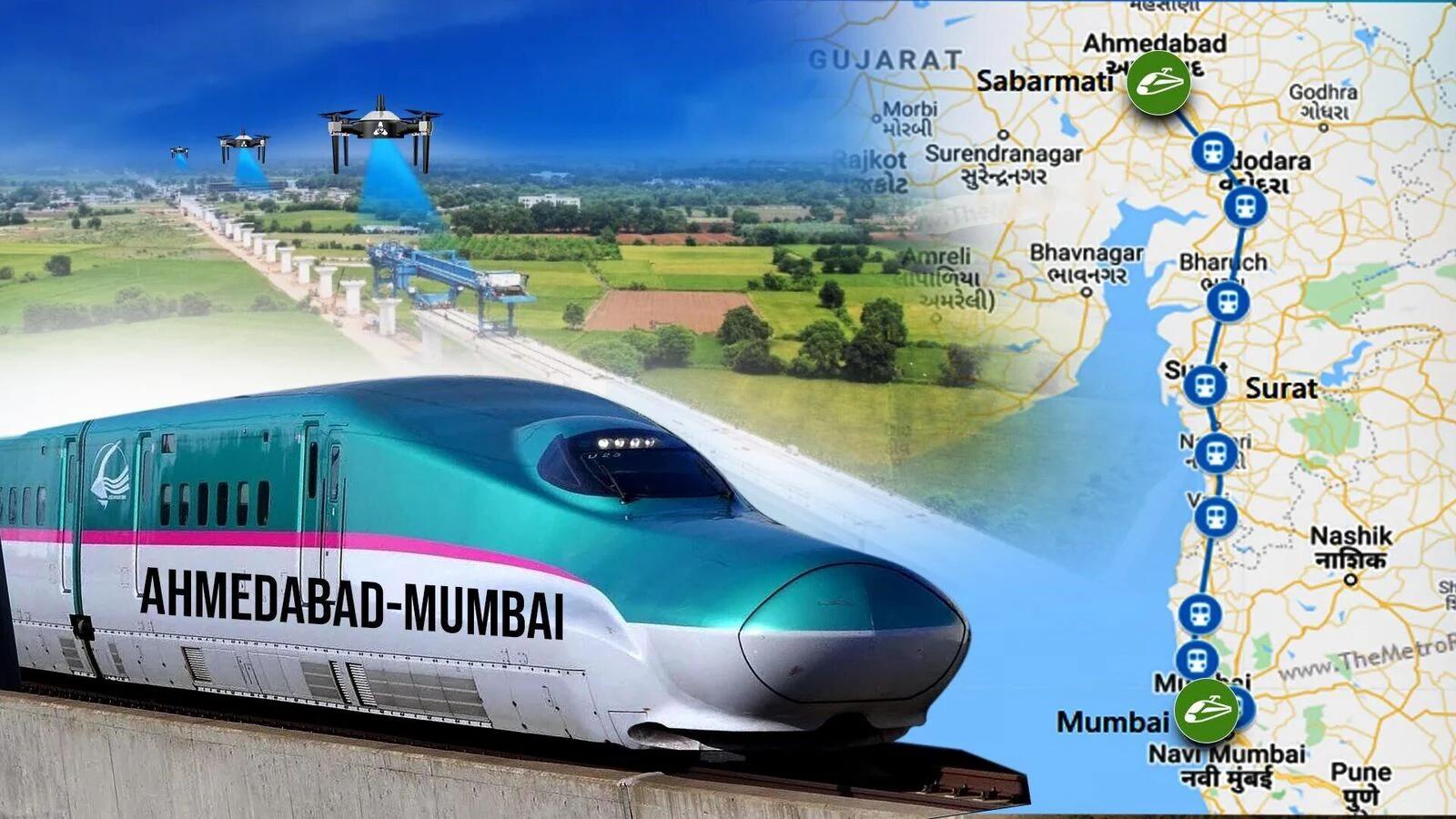
Mumbai-Ahmedabad Bullet Train Project, Mint
With construction progressing steadily, several key milestones have already been achieved, bringing the project closer to reality. Trial runs are expected soon, marking a crucial step toward operational readiness. Once completed, the bullet train will not only enhance connectivity but also stimulate economic growth, improve regional accessibility, and redefine inter-city transport in India.
Project Overview
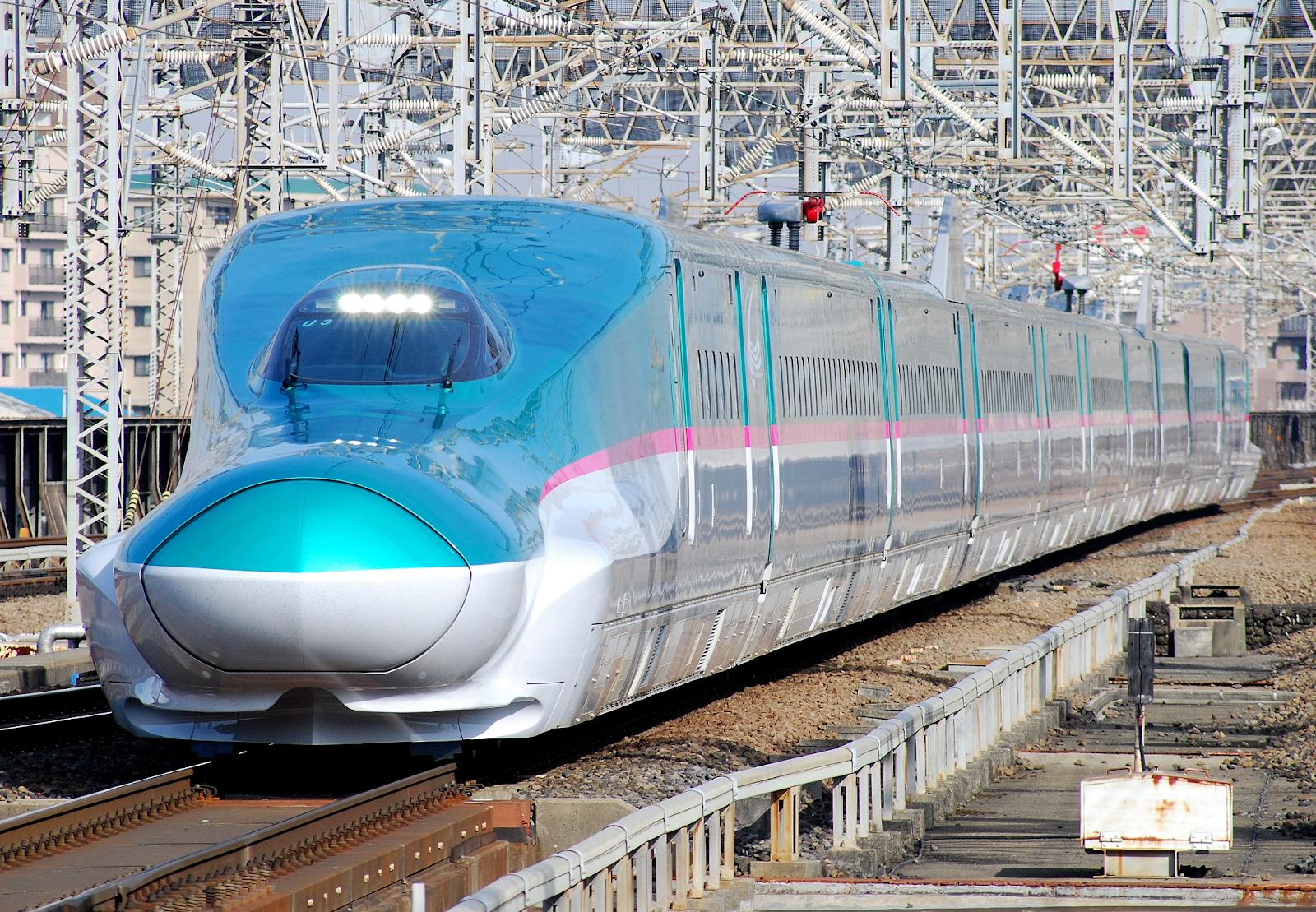
Mumbai-Ahmedabad High Speed Rail Corridor, Wiki
- Route: Mumbai (BKC) to Ahmedabad
- Length: Approx. 508 km
- Stations: 12
- Maximum Speed: 320 km/h
- Estimated Travel Time: 2 to 2.5 hours (non-stop), 3 hours (with stops)
- Technology Partner: Japan International Cooperation Agency (JICA)
- Implementing Agency: National High-Speed Rail Corporation Limited (NHSRCL)
Also Read: Ganga Expressway: Key Features, Route Map, Cost and Completion Timeline
Top Highlights of the Project
As of mid-2025, civil construction is nearing 50% completion. Major bridgeworks over rivers like Narmada and Tapti are in advanced stages. The Gujarat stretch, covering over 350 km, is seeing faster progress, while Maharashtra's BKC terminal saw foundation work begin in Q1 2025.
- Trial Runs: Expected by early 2026 on the Surat-Bilimora stretch.
- Full Operations: Targeted for late 2027 or early 2028, depending on land acquisition in Maharashtra.
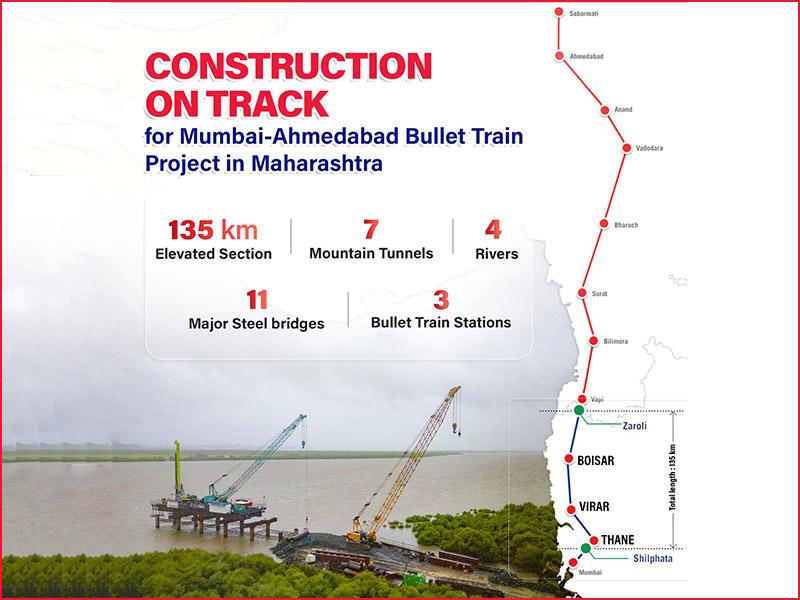
Mumbai Ahmedabad Bullet Train Construction, NBM CW
2. Cutting-Edge Technology from Japan
The Mumbai-Ahmedabad corridor will use the E5 Series Shinkansen trains, known for their aerodynamic design and energy efficiency. Features include:
- Automatic Train Control (ATC)
- Seismic detection systems
- Passenger comfort with reclining seats and noise control
- Real-time diagnostics for safety and speed
This marks the first instance of Japan's Shinkansen system being exported and customized for Indian conditions.
3. Stations and Key Stops
The 12 stations planned along the route are:

Mumbai-Ahmedabad Bullet Train Route Map, India Map
- Mumbai (BKC Terminal)
- Thane
- Virar
- Boisar
- Vapi
- Bilimora
- Surat
- Bharuch
- Vadodara
- Anand
- Ahmedabad
- Sabarmati
Each station will be modeled on airport-like standards with multi-modal integration.
4. Infrastructure and Design Innovations
- Elevated Tracks: 460+ km of the track will be elevated to reduce land acquisition issues.
- Underground Tunnel: A 21-km tunnel including a 7-km stretch under the sea near Thane Creek.
- Bridges: Special spans over rivers with advanced earthquake-resistant designs.
5. Funding and Cost Structure
The estimated cost of the project stands at ₹1.1 lakh crore. The funding model is:
- 81% via soft loan from JICA at 0.1% interest over 50 years.
- 15% by the Government of India.
- 4% by the Maharashtra and Gujarat state governments.
The affordable loan terms have made this one of India's most economically viable large-scale infrastructure projects.
6. Employment and Economic Impact
- Over 90,000 direct and indirect jobs are expected during the construction phase.
- Boost to sectors such as steel, cement, and electronics.
- Enhanced connectivity to Tier-2 cities like Vapi, Bharuch, and Boisar.
- Development of ancillary towns and real estate along the corridor.

Mumbai-Ahmedabad Bullet Train, Money Control
7. Environmental and Social Benefits
- Reduction in vehicular emissions by encouraging public transit.
- Faster cargo and passenger movement to reduce logistics time.
- Noise barriers and afforestation planned along the route.
- EV-based feeder transport being planned at stations.
Mumbai-Ahmedabad Bullet Train Project Timeline
|
Year |
Milestone |
|
2017 |
Foundation stone laid by PM Narendra Modi & Japanese PM Shinzo Abe |
|
2018-19 |
Land acquisition process begins |
|
2020 |
COVID-19 delays key approvals |
|
2021 |
Tendering and contracting for viaducts begins |
|
2022 |
Civil works commence in Gujarat |
|
2023 |
Major bridge construction and tunnel works begin |
|
2024 |
Maharashtra segment gains momentum |
|
2025 |
BKC terminal construction and viaduct work progress rapidly |
|
2026 |
Trial run planned for Surat-Bilimora |
|
2027-28 |
Commercial operations expected to begin |
Also Read: Virar-Alibaug Multimodal Corridor (VAMC): Catalyst for MMR Transformation
Why the Bullet Train Project Matters for India
The Mumbai-Ahmedabad Bullet Train project marks India's entry into the elite group of nations with high-speed rail systems, enhancing its global standing in infrastructure development. By adopting advanced Shinkansen technology from Japan, India showcases its commitment to modernizing transportation, aligning itself with countries like Japan, China, France, and Germany that have successfully implemented high-speed rail networks. This project not only improves domestic connectivity but also strengthens India's reputation as a forward-thinking nation in railway innovation.
Economic Growth
Connecting two major financial hubs, Mumbai and Ahmedabad, the bullet train is expected to significantly boost trade, commerce, and investment along its corridor. Faster travel times will facilitate business interactions, improve supply chain efficiency, and attract new industries to the region. Additionally, the project will create thousands of jobs in construction, operations, and maintenance, further contributing to India's economic growth and regional development.
Urban Planning
The introduction of high-speed rail will drive urban transformation by fostering the development of smart station zones and transit-oriented infrastructure. Cities along the corridor will witness improved land utilization, better connectivity, and enhanced public transport integration. This will encourage sustainable urban expansion, reduce congestion in metropolitan areas, and promote well-planned residential and commercial hubs around key stations.
Make in India
Aligned with the government's "Make in India" initiative, the bullet train project emphasizes domestic manufacturing of coaches and components through technology transfer from Japan. This will strengthen India's railway industry, boost local production capabilities, and reduce dependency on imports. By fostering indigenous expertise in high-speed rail technology, the project lays the foundation for future expansion of high-speed rail networks across the country.
Also Read: Mumbai Metro Line 12: A Closer Look at the Kalyan-Taloja Link
Latest Updates
The foundation work for the Bandra Kurla Complex (BKC) Terminal has commenced following the finalization of tunneling approvals. As Mumbai's primary bullet train station, BKC will serve as a crucial hub for high-speed rail operations, integrating seamlessly with existing metro and road networks. The underground station design, a first of its kind in India, ensures minimal disruption to the city's dense urban landscape while providing world-class passenger amenities.
Sabarmati Hub
The Sabarmati Terminal and Maintenance Depot are nearing completion, marking a significant milestone in the project's progress. Designed as a multi-modal transport hub, the terminal will connect the bullet train with Ahmedabad's metro and bus services, enhancing regional accessibility. The maintenance depot, equipped with advanced facilities, will play a vital role in servicing and housing the Shinkansen coaches, ensuring smooth operations and long-term efficiency.
Indigenous Participation
With over 90% of contracts awarded to Indian firms, the project underscores India's commitment to self-reliance in high-speed rail infrastructure. Local companies are actively involved in civil construction, track laying, and station development, fostering skill development and technological expertise. This strong indigenous participation not only boosts the domestic economy but also strengthens India's capability to expand high-speed rail networks in the future.
Train Trials
Japanese engineers, in collaboration with their Indian counterparts, are set to begin testing Shinkansen coaches by early 2026. These trials will assess the train's performance, safety features, and adaptability to Indian conditions. The rigorous testing phase will ensure seamless integration of Japanese technology with India's railway ecosystem, paving the way for a successful launch of the country's first bullet train service.
Conclusion
The Mumbai-Ahmedabad Bullet Train is not just a transportation project; it is a symbol of India's aspiration to leapfrog into a future of fast, safe, and efficient travel. With advanced technology, transformative economic implications, and a vision for sustainable development, the bullet train project is poised to become a national landmark. As civil works progress rapidly in 2025 and trial runs draw closer, India moves one step closer to redefining its railway legacy.

explore further
Latest from Editorials
More from Publications
Resources


