





Table of Contents
- Introduction
- Understanding the Repo Rate
- Context Leading to the Rate Cut
- Implications of the Rate Cut
- Future Outlook
- Conclusion
- Faq's
Introduction
On February 7, 2025, the Reserve Bank of India (RBI) announced a 25 basis points reduction in the repo rate, bringing it down to 6.25%. This decision, marking the first rate cut in nearly five years, was unanimously agreed upon by the six-member Monetary Policy Committee (MPC) and is aimed at stimulating economic growth amid signs of a slowdown.
Understanding the Repo Rate
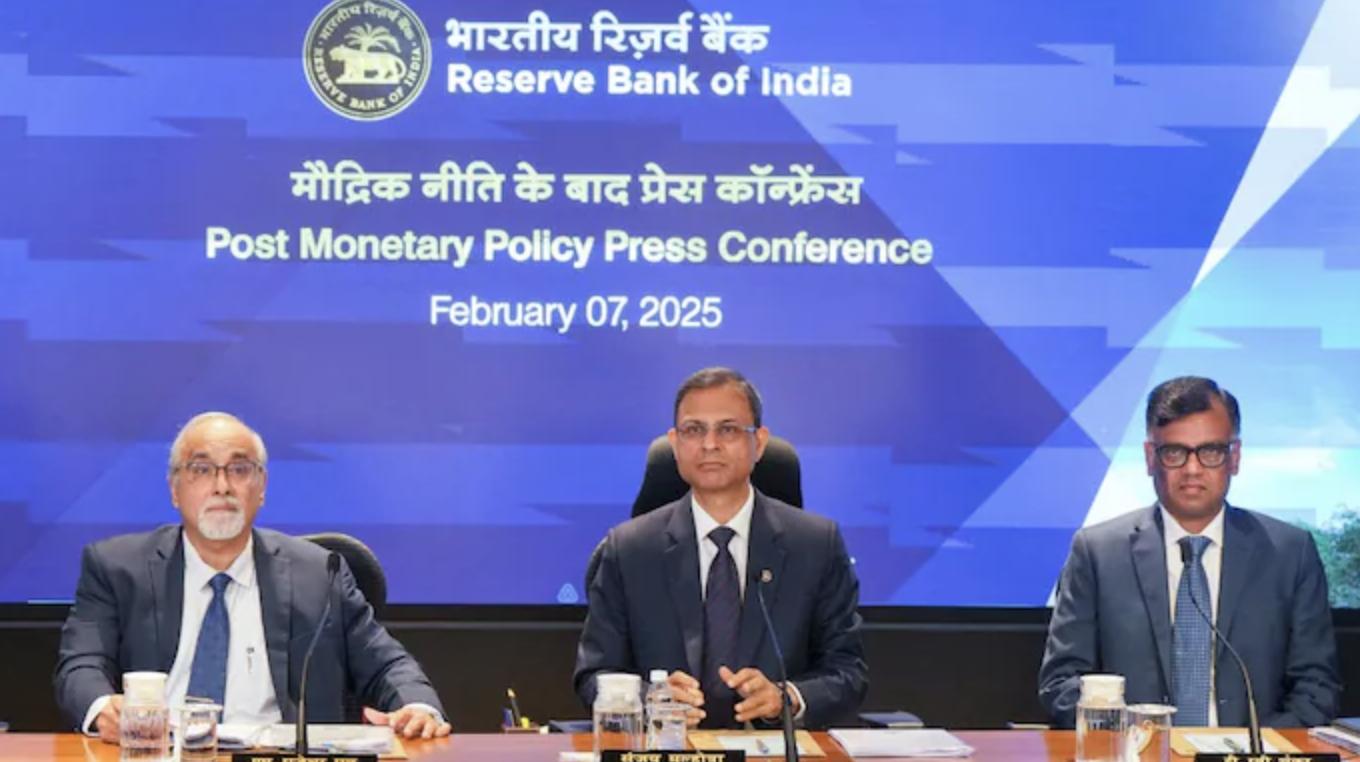 Post Monetary Policy Press Conference, India Today
- The repo rate is the interest rate at which the Reserve Bank of India (RBI) lends short-term funds to commercial banks. It serves as a crucial monetary policy tool used by the central bank to regulate liquidity in the banking system. By adjusting this rate, the RBI influences the money supply in the economy, helping to maintain financial stability and curb inflationary pressures.
- One of the primary objectives of the repo rate is to control inflation and economic activity. When inflation is high, the RBI increases the repo rate to make borrowing more expensive, thereby discouraging excessive spending and investment. Conversely, when economic growth slows down, the RBI reduces the repo rate to make borrowing cheaper, encouraging businesses and consumers to take loans and invest in various sectors.
- Changes in the repo rate directly impact loan interest rates, market liquidity, and overall economic momentum. A lower repo rate reduces borrowing costs for businesses and individuals, boosting consumption and investment. On the other hand, an increase in the repo rate makes loans more expensive, thereby reducing disposable income and slowing economic expansion. This dynamic makes the repo rate a powerful tool in shaping India's economic landscape.
Also Read: List of Scheduled Banks in India Under RBI 2025
Context Leading to the Rate Cut
Several factors contributed to the RBI's decision to reduce the repo rate:
- Economic Slowdown: India's GDP growth has been decelerating, with projections indicating a growth rate of 6.4% for the current fiscal year, the slowest in four years. High unemployment, subdued consumer spending, and weak investment have been significant concerns.
- Inflation Trends: While inflation has been a persistent issue, recent data shows a softening trend. The Consumer Price Index (CPI) eased to 5.22% in December 2024, providing the RBI with some leeway for monetary easing.
- Global Economic Uncertainty: Trade tensions and supply chain disruptions have added to economic challenges. Recent U.S. tariffs on multiple countries have sparked fears of a trade war, further complicating the global economic environment.
Also Read: 13 Most Frequently Asked Questions Related to Home Loans in 2025
Implications of the Rate Cut
The reduction in the repo rate is expected to have a wide range of economic and financial implications, affecting borrowing costs, the real estate sector, financial markets, and overall economic activity. Here's a deeper look at how these changes will impact different segments:
1. Lower Borrowing Costs
- A decrease in the repo rate typically leads to lower interest rates on loans, making borrowing more affordable for both individuals and businesses. As banks can access funds at a lower cost from the RBI, they usually pass on the benefits to consumers by reducing lending rates for home loans, auto loans, and business loans. This stimulates spending and investment, encouraging companies to expand operations, invest in new projects, and create employment opportunities.
- For individuals, reduced loan rates mean lower EMIs (Equated Monthly Installments), improving their purchasing power. Sectors that rely heavily on consumer financing, such as automobiles, home appliances, and retail, tend to see increased demand. This, in turn, can help revive consumption-driven economic growth. However, the extent to which banks pass on the benefits depends on various factors, including their liquidity position and the demand for credit in the economy.
2. Real Estate Sector Boost
- The real estate sector, which has faced challenges due to high-interest rates and subdued demand, is likely to benefit significantly from the repo rate cut. Since home loans become more affordable, potential homebuyers are more inclined to invest in property. Lower financing costs encourage first-time homebuyers and those looking to upgrade their properties, leading to an increase in housing demand.
- Real estate developers and industry leaders have welcomed this move, as it is expected to revive stalled projects and boost sales, particularly in the mid and affordable housing segments. Additionally, lower interest rates improve investor sentiment in the real estate market, attracting more investments in commercial and residential properties. If the rate cut is complemented by government incentives and favorable housing policies, the sector could witness a sustained recovery.
3. Financial Markets Reaction
- Stock markets tend to react positively to a rate cut, especially in sectors that benefit directly from lower interest rates. After the repo rate reduction, interest rate-sensitive sectors like banking, real estate, and automobiles witnessed gains in the stock market. Banking stocks generally perform well after a rate cut since lower interest rates encourage borrowing and increase credit demand, boosting banks' lending activity.
- However, while the stock market responds positively, the currency market may face volatility. Following the rate cut, the Indian rupee has come under pressure, primarily due to global uncertainties, foreign investor movements, and trade tensions. A weaker rupee may increase import costs, affecting sectors reliant on foreign goods and services. The RBI may need to manage liquidity carefully to prevent excessive currency depreciation while ensuring that the benefits of the rate cut reach businesses and consumers effectively.
- Overall, the repo rate reduction is expected to create a favorable environment for economic growth, encouraging spending, investment, and job creation. However, external global factors, inflation trends, and the banking sector's response will determine the long-term impact of this monetary policy decision.
Also Read: List of Payments Bank and Small Finance Banks in India - 2025
Future Outlook
- The Reserve Bank of India (RBI) has adopted a neutral policy stance, meaning future repo rate decisions will be based on the evolving economic landscape rather than a predetermined direction. This approach provides the central bank with flexibility to respond to inflation trends, economic growth, and global financial conditions. If inflation remains moderate and the economy requires further stimulus, the RBI may consider additional rate cuts to support credit expansion and consumption. However, if inflationary pressures resurface due to supply-side constraints or global commodity price hikes, the RBI may opt to keep rates unchanged to maintain financial stability.
- Analysts and economists predict a high probability of further rate cuts in 2025, contingent on domestic and global economic indicators. If economic growth continues to slow or remains below expectations, the central bank may introduce additional monetary easing to encourage investment and employment generation. Additionally, factors such as global interest rate trends, foreign capital inflows, and fiscal policies will play a crucial role in shaping future monetary policy. Any unforeseen external shocks, such as geopolitical tensions or supply chain disruptions, could also influence the RBI's stance.
- While a lower interest rate environment can help stimulate borrowing and economic activity, the RBI must also ensure financial stability. Excessive monetary easing could lead to asset price bubbles, increased debt levels, and potential risks to the banking sector. Therefore, the central bank will likely adopt a cautious and data-driven approach, balancing growth objectives with inflation control. In the coming months, market participants, businesses, and consumers will closely monitor inflation figures, credit growth, and policy signals from the RBI to anticipate further actions.
Conclusion
The RBI's decision to cut the repo rate by 25 basis points reflects a strategic move to stimulate economic growth amid prevailing challenges. By making borrowing more affordable, the central bank aims to encourage spending and investment, providing a much-needed impetus to the economy. As the situation evolves, stakeholders will closely monitor the effects of this policy change on various sectors and the broader economic landscape.

explore further
Latest from Editorials
More from Publications
Resources


