




Table of Contents
- Introduction
- Importance of Mandirs in Indian Culture
- Historical Significance of Mandir Architecture
- Key Elements of Traditional Mandir Design
- Incorporating Traditional Mandir Designs in Contemporary Homes
- Design Inspirations and Ideas
- Maintenance and Care of Traditional Materials
- Cultural and Spiritual Benefits
- Conclusion
- Faq's
Introduction
The Mandir, or home temple, holds a place of profound significance in Indian culture. More than just a space for prayer, it's a sanctuary of peace, a connection to our heritage, and a focal point for spiritual growth within the family. While modern aesthetics often dominate interior design, incorporating elements of traditional Mandir design can infuse your home with a sense of timeless beauty and spiritual depth. This guide explores the rich history, key design principles, and practical tips for bringing the essence of a traditional Mandir into your contemporary living space.
Importance of Mandirs in Indian Culture
Mandirs, or Hindu temples, are vital components of Indian culture and spirituality. They serve several key functions:
- Spiritual Practice: Mandirs facilitate worship (puja), rituals, and meditation, providing a space for individuals and families to connect with the divine. The presence of deities in the architecture inspires devotion and daily spiritual practice.
- Community Center: Beyond worship, mandirs act as social hubs where community members gather for festivals, cultural programs, and religious events. This fosters a sense of belonging and strengthens communal ties.
- Cultural Traditions: Mandirs preserve and promote cultural heritage through traditional music, dance, art, and storytelling associated with various deities and festivals, serving as living museums of cultural continuity.
- Education: Many mandirs host classes and workshops on religious texts, languages, and arts, offering education to both children and adults on spirituality and cultural values.
- Service Projects: Mandirs often engage in charitable activities, including food distribution, health camps, and educational initiatives, addressing social issues and aiding the less fortunate.
- Peace and Meditation: The serene environment of a mandir fosters tranquility and mindfulness, allowing visitors to escape the chaos of daily life and cultivate inner peace.
In homes, mandirs create a sacred space that encourages daily rituals, strengthens family bonds through shared spiritual practices, and imparts traditional values to younger generations. They symbolize devotion and mindfulness within the household.
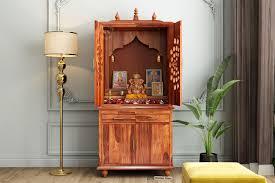 Indian Temple Interiors,Pinterest
Historical Significance of Mandir Architecture
Mandirs, or Hindu temples, are significant cultural and religious structures in India, reflecting the country's diverse architectural traditions shaped by historical influences. Key styles include:
- Indo-Aryan Style: Predominant in North India, characterized by curvilinear shikharas (spires) and elaborate carvings. Notable examples include the temples at Khajuraho and the Kashi Vishwanath Temple in Varanasi.
- Dravidian Style: Found mainly in South India, this style features towering gopurams (gateway towers) and extensive sculpture work. Exemplified by the Meenakshi Temple in Madurai and the Brihadeeswarar Temple in Thanjavur.
- Nagara and Vesara Styles: Variations of the Indo-Aryan style, with Nagara temples prominently featuring shikhara and Vesara combining elements of both Dravidian and Nagara styles.
- Regional Variations: Other regions have their own unique styles, such as the ornate temple architecture of Gujarat and the intricate woodwork of the Odisha temples, like the Konark Sun Temple.
- Symbolism and Design: Mandirs are designed to be microcosms of the universe, symbolizing the connection between the material and spiritual worlds. The placement of deities, mandapas (pillared halls), and sanctums follows specific religious guidelines.
- Cultural Significance: Mandirs serve as community centers, hosting festivals, rituals, and artistic performances, thus playing a crucial role in preserving traditions and fostering social cohesion.
These architectural marvels not only reflect aesthetic beauty but also carry deep spiritual significance, embodying centuries of religious devotion and artistic achievement in India.
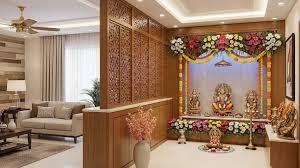 Historical Significance of Mandir Architecture,Pinterest
Key Elements of Traditional Mandir Design
Traditional Mandir designs typically feature:
- Shikharas or Vimana: Towering structures symbolizing spiritual ascent.
- Carvings and Sculptures: Intricate depictions of deities and mythological stories.
- Sacred Altars (Garbhagriha): The inner sanctum housing the main deity.
- Courtyards: Open spaces for gatherings and rituals.
- Chowkis or Sitting Areas: Spaces for prayer and meditation.
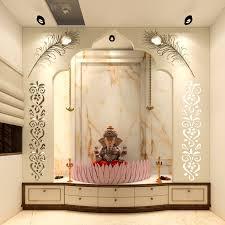 Elements of Traditional Mandir Design,Pinterest
Incorporating Traditional Mandir Designs in Contemporary Homes
Integrating traditional Mandir designs into modern homes can be achieved through:
- Designated Spaces: Creating a nook for a Mandir that aligns with traditional aesthetics.
- Material Selection: Using wood, stone, and metal reflective of traditional styles.
- Lighting and Décor: Employing soft lighting and traditional artifacts to enhance the ambiance.
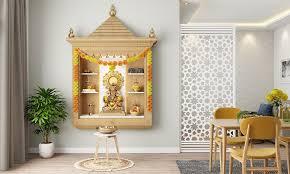 Incorporating Traditional Mandir Designs,Pinterest
Design Inspirations and Ideas
Consider these inspirations:
- Minimalist Mandirs: Simple yet elegant designs with essential elements.
- Multi-Functional Spaces: Combining Mandir spaces with family areas for utility.
- Outdoor Mandirs: Incorporating garden spaces for meditation and leisure.
Maintenance and Care of Traditional Materials
To preserve traditional Mandir designs:
- Regular Cleaning: Use gentle, natural cleaners to maintain aesthetics.
- Humidity Control: Ensure proper ventilation to protect wood and other materials.
- Restoration: Address damages promptly to sustain architectural integrity.
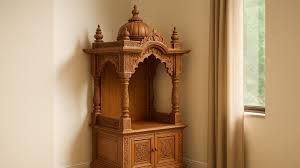 Maintenance of Traditional Mandir,Pinterest
Cultural and Spiritual Benefits
Incorporating a traditional Mandir in your home provides:
- Enhanced Spiritual Practices: A dedicated space for prayer increases mindfulness.
- Cultural Continuity: Preserving traditions fosters a sense of identity for future generations.
- Community Bonding: A home Mandir can be a gathering point for family rituals and celebrations.
Conclusion
Bringing traditional Mandir designs into contemporary homes is more than a mere aesthetic choice; it's a profound way to honor Indian heritage, enriching homes with cultural significance and spiritual tranquility. By thoughtfully incorporating these elements, one can create serene spaces that celebrate both tradition and modernity.

explore further
Latest from Contemporary ideas
More from Innovations
Resources


