





Table of Contents
- India's Vision Through Khavda
- Project Highlights and Scale
- Recent Milestones Achieved in 2025
- Development Timeline
- Technical Composition of the Park
- Adani Green Energy's Role and Capacity Roadmap
- Green Hydrogen Pilot at Khavda
- Environmental and Economic Impact
- Strategic Considerations and Controversies
- Future Outlook
- Conclusion
- Faq's
India's Vision Through Khavda
Khavda Renewable Energy Park, located in the Kutch district of Gujarat, is poised to become the world's largest renewable energy installation. Spanning over 72,000 hectares, this hybrid park combines solar, wind, and energy storage technologies. Designed to support India's goal of achieving 500 GW of non-fossil fuel capacity by 2030, Khavda is not just a national milestone but a global benchmark.
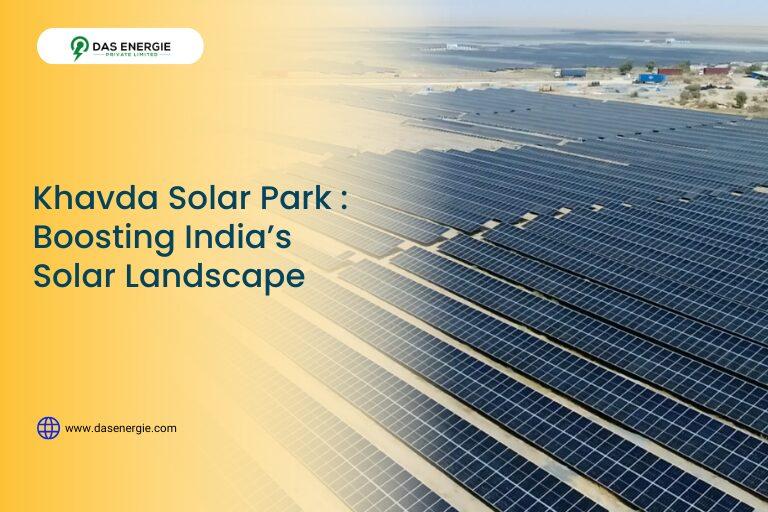
Khavda Solar Park, Solar Energy, Solar Company
The park is strategically situated near the India-Pakistan border and benefits from high solar irradiance and strong wind currents. With the foundation stone laid in 2020, development at the site has rapidly accelerated over the last few years, particularly under the leadership of Adani Green Energy Limited.
Project Highlights and Scale
- Khavda Renewable Energy Park covers approximately 538 square kilometers, which makes it larger than many major global cities. Its planned capacity of 30 GW includes a combination of solar PV installations, wind turbines, and hybrid technologies with battery energy storage systems.
- Key infrastructure includes grid connectivity corridors developed in collaboration with Power Grid Corporation of India and a dedicated transmission capacity being built to evacuate power across states. The project has received full support from the central and Gujarat state governments, including policy-level interventions to fast-track clearances.
Also Read: How GIFT City Is Transforming Investing for Indians and Global Firms
Recent Milestones Achieved in 2025
- Adani Green Energy Limited has been at the forefront of executing large-scale installations at Khavda. As of mid-2025, the company has commissioned over 5,355 MW of capacity at the park, out of its total operational renewable portfolio of 15,554 MW.
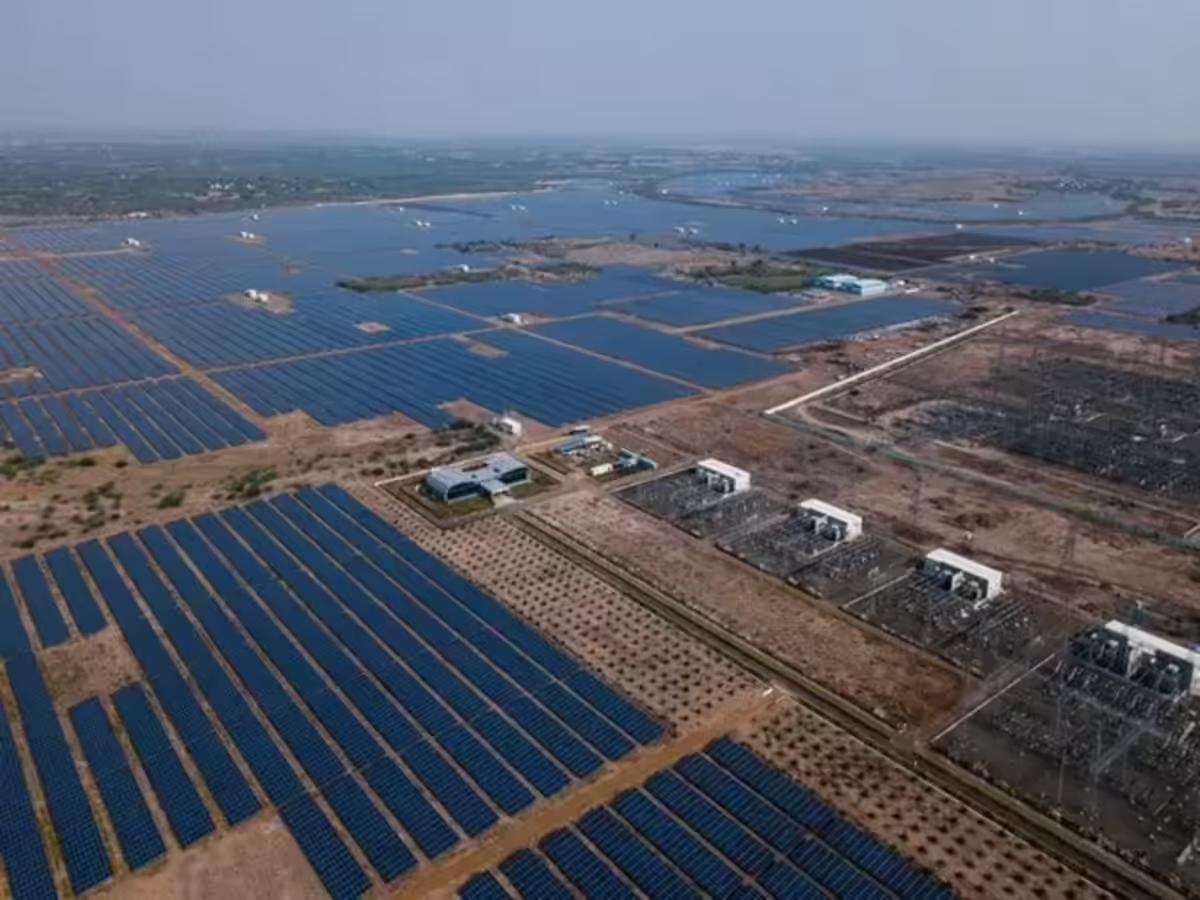
Largest Renewable Energy Park in Khavda, TOI
Recent capacity additions at Khavda:
- In May 2025, Adani Green commissioned a 187.5 MW solar power project through its subsidiary.
- By June 2025, an additional 1,011.5 MW of solar, wind, and hybrid capacity was brought online.
These milestones bring Adani's contribution at Khavda to a significant level and reflect the pace at which India is moving toward large-scale renewable adoption.
Development Timeline
The timeline of the Khavda Renewable Energy Park showcases both planning foresight and execution speed. Some of the key developments include:
- September 2020: Government approval for the 30 GW project
- December 2020: Foundation stone laid by the Prime Minister
- March 2024: 1 GW of solar capacity commissioned
- July 2024: Wind installations go live
- March 2025: Adani Green reaches 14.2 GW of total renewable capacity, with 1.46 GW added from Khavda
- June 2025: Adani Green surpasses 15.5 GW overall capacity, with major contributions from Khavda
The scale and complexity of the project make these achievements significant within the global clean energy landscape.
Also Read: All You Need to Know About the Chenab Rail Bridge
Technical Composition of the Park
- Khavda's layout includes separate zones for solar, wind, and hybrid installations. Advanced solar PV panels, high-capacity wind turbines, and energy storage systems are being deployed. More than 55 million solar modules and over 1,000 wind turbines are expected to be installed by the time the project reaches full capacity.
- The energy generated here will feed into the national grid via ultra-high voltage transmission lines, with significant investments already made into power evacuation infrastructure.
Adani Green Energy's Role and Capacity Roadmap
- Adani Green Energy Limited is currently the largest renewable energy company in India by operational capacity. With over 15.5 GW commissioned as of mid-2025, the company aims to scale up to 45 to 50 GW by 2030. Khavda will account for 30 GW of this portfolio, reinforcing its strategic importance.
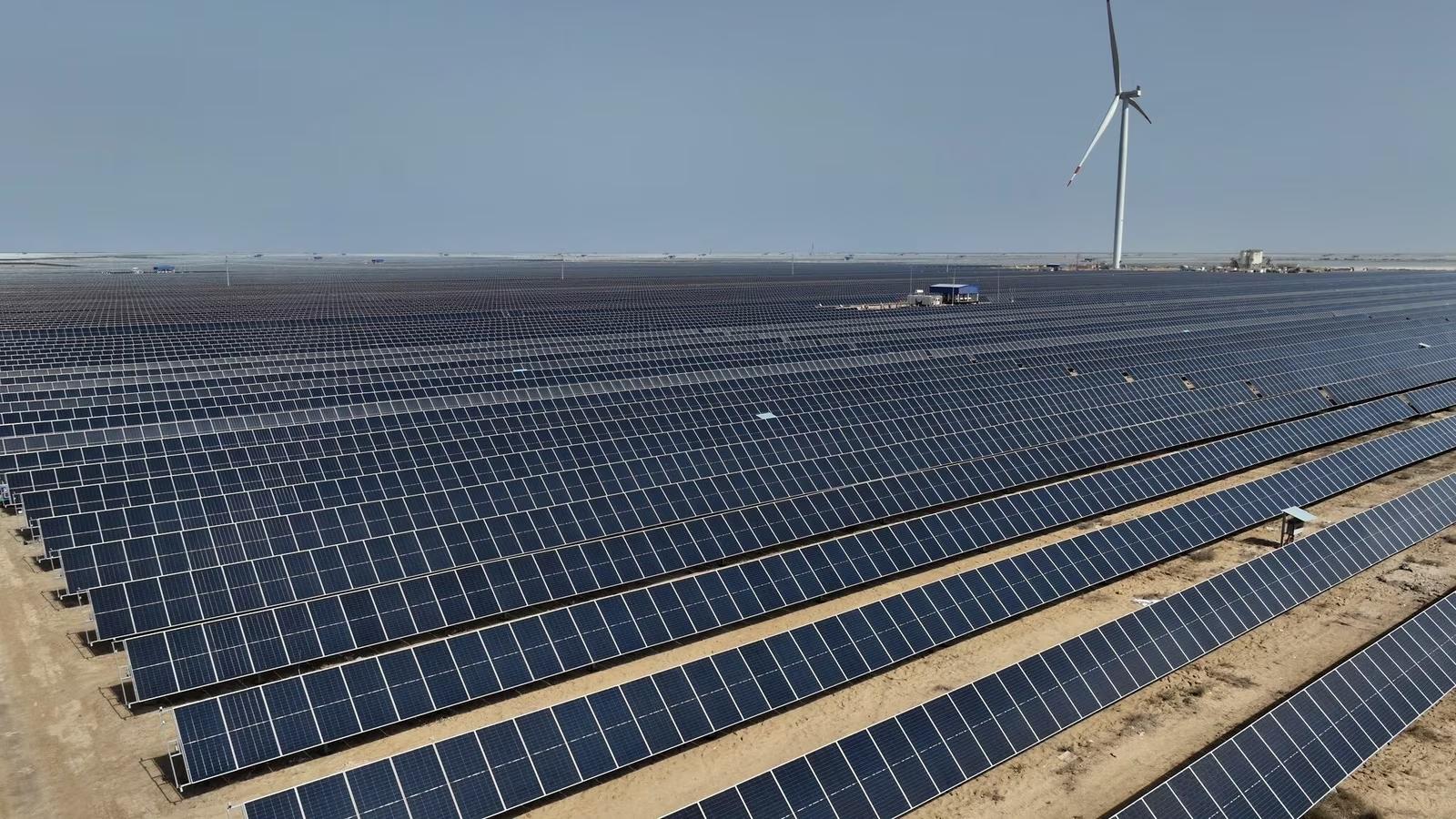
Adani Group's Khavda Renewable Energy Plant, HT
- Adani Green has also aligned its operations with sustainability benchmarks and ESG ratings. The company has issued green bonds, secured international investments, and received recognition for water-positive and carbon-offset initiatives. It currently offsets more than 28 million tonnes of CO2 emissions annually.
Also Read: Inside Dholera Smart City: Infrastructure, Investment, and Growth in 2025
Green Hydrogen Pilot at Khavda
- In addition to renewable generation, Adani has also commissioned a green hydrogen pilot plant near the Khavda site. This 5 MW off-grid green hydrogen facility is one of the first in India and marks a strategic shift toward green molecule production. Hydrogen produced from this plant will cater to industrial applications and clean fuel programs, expanding the utility of Khavda beyond electricity generation.
- This positions Khavda as not only a renewable electricity hub but also as a potential center for green hydrogen innovation in the future.
Environmental and Economic Impact
- The Khavda Renewable Energy Park is expected to offset over 50 million tonnes of carbon dioxide emissions annually once fully operational. It will also play a crucial role in improving air quality, reducing fossil fuel dependency, and supporting India's climate commitments.
- Economically, the project has generated over 100,000 employment opportunities during construction and is set to provide long-term jobs in operations, maintenance, and downstream industries. The development has also sparked the growth of supporting infrastructure in the region, including roads, utilities, and housing for workers.
Strategic Considerations and Controversies
- The park's proximity to the India-Pakistan border has drawn strategic attention. In 2023 and 2024, regulatory relaxations by the Ministry of Defence allowed construction within one kilometer of the international border. While this expedited development, it also sparked concerns over national security protocols.
- Separately, questions have been raised in global media about corporate governance, land acquisition, and transparency. However, the project continues to progress with full government backing, and the developer has denied any wrongdoing or impropriety.
Future Outlook
- The Khavda Renewable Energy Park is set to play a central role in India's transition to clean energy. With continued investments in battery storage, green hydrogen, and advanced grid management systems, the park will likely serve as a blueprint for other mega renewable projects globally.
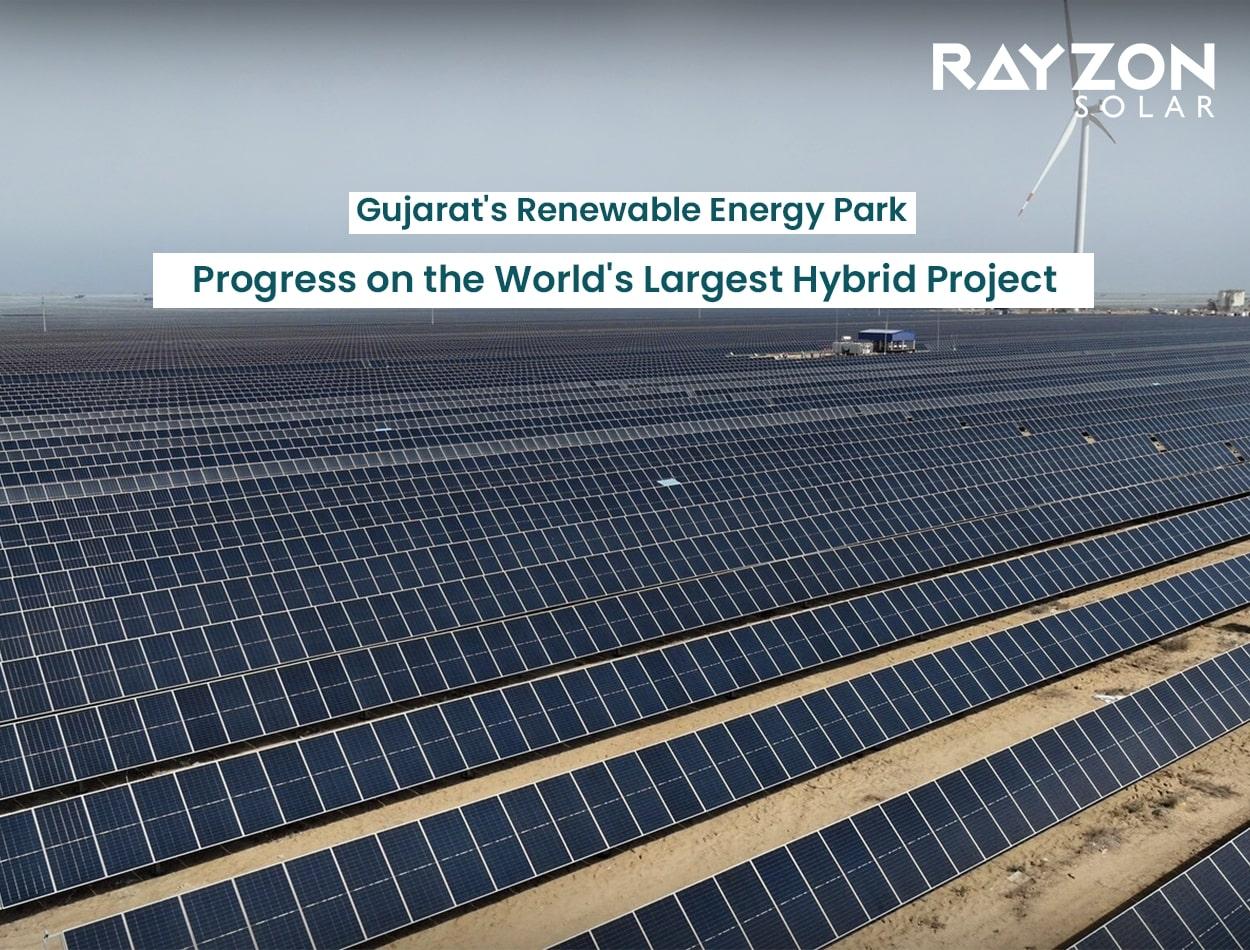
Renewable Energy Park Project, Rayzon Solar
- The next five years will be critical as the project scales from its current 5 GW to the full 30 GW. Continued collaboration between government agencies, private sector developers, and financial institutions will be essential to realizing this vision.
Conclusion
Khavda Renewable Energy Park stands as a monumental step in India's renewable energy journey. With rapid progress in commissioning solar, wind, and hybrid capacities, and the addition of green hydrogen to its portfolio, Khavda is much more than a power plant. It is a national project with global implications, symbolizing India's readiness to lead the clean energy transition. As the world watches, Khavda is not just fulfilling its energy promise but also reshaping the future of sustainable infrastructure.

explore further
Latest from Editorials
More from Publications
Resources


