





Table of Contents
- Introduction
- Overview of Parking Fees
- Importance of Studying Parking Pricing
- The Economics of Parking Fees
- Variations in Parking Pricing
- The Role of Technology in Parking Management
- Environmental Impact of Parking Fees
- Conclusion
- Faq's
Introduction
Parking fees play a crucial role in urban planning and transportation management. As cities grow and traffic congestion intensifies, understanding the intricacies of parking pricing becomes essential. This examination delves into the economics, variations, technological advancements, and environmental implications associated with parking fees, highlighting their significance in promoting efficient urban mobility.
Overview of Parking Fees
Parking fees are charges levied for the use of parking spaces, which can be found in public and private lots, street parking, and residential areas. These fees can vary based on location, time of day, and demand. With rising urbanization and limited space, municipalities are increasingly relying on these fees to manage traffic flow and generate revenue.
Importance of Studying Parking Pricing
- Impact on Individuals: How parking fees affect personal budgets, commuting decisions, and access to amenities/services.
- Impact on Businesses: How parking availability and pricing impact retail businesses, restaurants, and other local establishments.
- Impact on Urban Planning: Parking as a tool to manage congestion, encourage alternative transportation, and shape urban development.
- Impact on Real Estate: How parking availability can influence property value and attract residents.
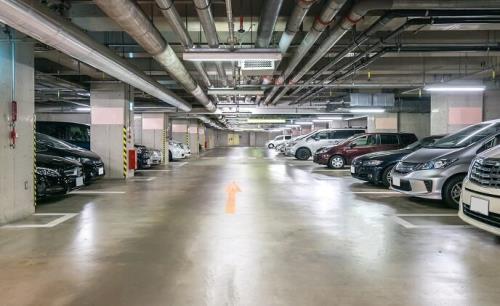 Society Parking, ADDA
The Economics of Parking Fees
- Supply and Demand: Explain the fundamental economic principles governing parking fees. High demand and limited supply lead to higher prices.
- Cost Recovery: Discuss how parking fees are used to cover the costs of building, maintaining, and managing parking facilities.
- Revenue Generation: Explain how parking fees can be a source of revenue for cities, businesses, or property owners.
- Opportunity Cost: Discuss the concept of opportunity cost related to parking spaces - what else could that land be used for?
- Elasticity of Demand: How sensitive is the demand for parking to price changes?
 parking management,Linkedin
Variations in Parking Pricing
- Location-Based Pricing: Explain why parking fees vary widely based on location (downtown vs. suburban areas).
- Time-of-Day Pricing (Dynamic Pricing): Discuss how parking fees can fluctuate based on the time of day, with peak hours costing more.
- Demand-Based Pricing: Explain how parking fees change according to demand using real-time data.
- Event-Based Pricing: How special events (concerts, sports games) can significantly impact parking prices.
- Subscription/Permit Models: Discuss monthly or annual parking permits and their pricing structure.
The Role of Technology in Parking Management
- Smart Parking Systems: Introduce technologies like sensors, mobile apps, and online platforms that help drivers find and pay for parking.
- Real-Time Availability Tracking: Explain how sensors and data analytics can provide real-time information on parking availability.
- Mobile Payment Options: Discuss the convenience and efficiency of mobile payment apps for parking.
- Automated Parking Systems: Discuss robotic parking systems that maximizes the number of cars in a given space.
- Data Analytics: How data collected from parking systems can be used to optimize pricing, manage demand, and improve efficiency.
Environmental Impact of Parking Fees
- Congestion Reduction: How higher parking fees can discourage driving and reduce traffic congestion.
- Encouraging Alternative Transportation: Discuss how parking fees can incentivize the use of public transportation, cycling, and walking.
- Reducing Urban Sprawl: Explain how parking policies can influence urban development patterns and reduce reliance on cars.
- Impact on Air Quality: Discuss how reduced traffic congestion can improve air quality and reduce carbon emissions.
- Sustainability Initiatives: Discuss parking policies that support sustainability goals (e.g., electric vehicle charging stations, preferential parking for carpools).
Conclusion
Understanding parking fees is essential for developing fair pricing systems that promote efficient urban mobility and environmental sustainability. As cities continue to evolve, integrating economic principles with technology will be key to optimizing parking management and enhancing livability.

explore further
Latest from Contemporary ideas
More from Innovations
Resources


