




Table of Contents
- Introduction
- General Guidelines for Fire Extinguisher Placement
- Room-by-Room Guide
- Using a Fire Extinguisher (The PASS Method)
- Choosing the Right Extinguisher
- Guidelines for placement near exits
- Conclusion
- Faq's
Introduction
A fire can erupt unexpectedly, turning a safe haven into a dangerous environment in a matter of seconds. While smoke detectors provide early warnings, a fire extinguisher offers a critical first line of defense to contain a small fire before it escalates. However, simply owning a fire extinguisher isn't enough. Proper placement is paramount. This comprehensive guide will walk you through strategically placing fire extinguishers throughout your home, room by room, maximizing your chances of a successful and safe response to a fire emergency.
General Guidelines for Fire Extinguisher Placement
- Accessibility: Extinguishers should be easily accessible and not hidden behind obstacles. Ensure they are readily available to anyone who might need to use them.
- Visibility: Mount extinguishers in plain sight, where they can be quickly located in an emergency. Consider using brightly colored brackets or signage to enhance visibility.
- Height: Mount extinguishers at a height that is easily reachable for all adults in the household. A good rule of thumb is to place the top of the extinguisher no more than 5 feet from the ground.
- Proximity to Hazards: Place extinguishers near potential fire hazards, such as cooking areas, heating appliances, and electrical panels, but not directly above them (where they could be caught in the fire).
- Quantity: More is often better. Consider having multiple extinguishers, especially in larger homes or multi-story dwellings.
- Regular Inspection: Visually inspect your fire extinguishers monthly to ensure they are fully charged and in good working order. Have them professionally serviced as recommended by the manufacturer.
- Clear Path: Ensure there's a clear, unobstructed path to the fire extinguisher from the area it is meant to protect.
- Away from Heat/Cold: Avoid placing extinguishers in areas exposed to extreme temperatures, which can affect their pressure.
 Home Fire Extinguisher Placement,Pinterest
Room-by-Room Guide
- Kitchen: The kitchen is the most common location for home fires. A multi-purpose (ABC) extinguisher is essential. Mount it near an exit point, away from the stove but within easy reach. A Class K extinguisher is recommended for commercial kitchens, and could be used for cooking oil or grease fires.
- Garage/Workshop: Garages and workshops often contain flammable materials like gasoline, oil, and solvents. A multi-purpose (ABC) extinguisher is crucial. A Class B extinguisher is best for flammable liquids. Mount it near the door leading into the house or near the most common work area.
- Living Room/Family Room: While less prone to fires than kitchens, living areas still pose risks from fireplaces, electrical devices, and heating equipment. An ABC extinguisher is suitable. Place it near a doorway or in a central location.
- Bedrooms: Bedrooms are particularly important to protect since people are often asleep and vulnerable. An ABC extinguisher is a good choice. Consider placing one near the bedroom door or in the hallway outside the bedrooms.
- Laundry Room: Lint buildup in dryers is a common fire hazard. An ABC extinguisher should be readily available. Mount it near the door or dryer.
- Basement: Basements often house furnaces, water heaters, and electrical panels, all potential fire hazards. An ABC extinguisher is a must. Place it near the stairs leading to the main floor or near the furnace.
- Near Exit Doors: Having a fire extinguisher by an exit door can be very useful to extinguish any fire or to help escape the house.
 Home Fire Safety,,Pinterest
Using a Fire Extinguisher (The PASS Method)
Knowing how to use a fire extinguisher is just as important as having one. Remember the PASS acronym:
- Pull the pin.
- Aim at the base of the fire.
- Squeeze the lever slowly and evenly.
- Sweep from side to side until the fire is extinguished.
- Evacuate: Always evacuate the premises once the fire is extinguished, even if you think it's completely out. Call the fire department to ensure the fire is fully extinguished and to inspect for any hidden embers or hotspots.
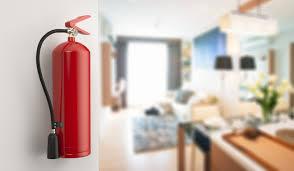 Using a Fire Extinguisher,Pinterest
Choosing the Right Extinguisher
- Class A: For ordinary combustibles like wood, paper, and cloth.
- Class B: For flammable liquids like gasoline, oil, and grease.
- Class C: For electrical fires (energized equipment).
- Class D: For combustible metals like magnesium, titanium, and sodium.
- Class K: For kitchen fires involving cooking oils and fats.
- Multi-Purpose (ABC): Covers Class A, B, and C fires and is a good choice for general home use.
- Size and Weight: Consider the size and weight of the extinguisher. Can you easily handle it in an emergency?.
- UL Listed: Ensure the extinguisher is UL (Underwriters Laboratories) listed, indicating it meets safety standards.
Guidelines for placement near exits
- Have a fire extinguisher by an exit door so it is easily accessible
- Mount the extinguisher so that you can easily access it
- Ensure that the exit door can be opened without any obstruction or difficulty
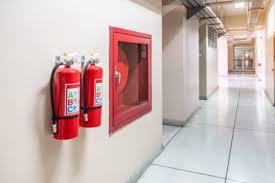 Placement Near Exits,Pinterest
Conclusion
Investing in fire extinguishers and strategically placing them throughout your home is a crucial step in protecting your family and property from fire. By following these guidelines and practicing proper usage, you can be better prepared to respond effectively to a fire emergency and minimize potential damage. Remember, fire safety is an ongoing process. Regularly inspect your extinguishers, educate your family on their location and use, and practice your fire escape plan.

explore further
Latest from Contemporary ideas
More from Innovations
Resources


